
Gentle Shampoo for Postpartum Hair Loss
Postpartum Hair Care · 2026 Guide
The Best Gentle Shampoos
for Postpartum Hair Loss
Sulfate-free, breastfeeding-safe formulas reviewed for new moms — ranked by ingredient quality, scalp safety, and real-world results.
- ✓ Updated March 2026
- ✓ 7 Products Reviewed
- ✓ Dermatologist-Cited
- ✓ Breastfeeding Safety Noted
You grew a human. And now your hair is staging a dramatic exit — in the shower drain, on your pillow, everywhere. Postpartum hair loss (medically known as telogen effluvium) affects up to 50% of new mothers. The good news: it's temporary. The right gentle shampoo meaningfully reduces scalp irritation, preserves what you have, and supports recovery.
This guide breaks down exactly what to look for, what to avoid, and which seven shampoos are worth your money in 2026 — matched to your specific hair type and scalp needs.
Why "Gentle" Is Non-Negotiable for Postpartum Hair
After delivery, estrogen drops sharply — pushing large numbers of follicles from the active growth phase into the shedding phase simultaneously. Shedding peaks around 3–4 months postpartum. At the same time, the postpartum scalp is significantly more reactive than usual. Harsh surfactants strip the natural lipid barrier, causing dryness, micro-inflammation, and irritation — all of which prolong recovery.
The Hormonal Trigger
Estrogen drops post-delivery, pushing follicles en masse into the telogen shedding phase — a temporary, normal process.
Scalp Barrier Health
Postpartum scalps are reactive. A disrupted barrier prolongs recovery. Gentle, low-surfactant formulas protect it.
Recovery Timeline
Shedding peaks at 3–4 months postpartum and typically resolves within 6–12 months as hormones stabilize.
Breastfeeding Safety
Topical products can absorb through the scalp in small amounts. Sulfate-free, fragrance-free formulas are safest while nursing.
Ingredients to Look For in a Postpartum Shampoo
These science-backed ingredients are worth seeking out on the label:
Ingredients to Avoid in Postpartum Shampoos
Scan the label for these before buying — they're among the most common causes of scalp barrier disruption and irritation:
The 7 Best Gentle Shampoos for Postpartum Hair Loss
How we chose these: All products are sulfate-free, paraben-free, and low-fragrance — the baseline for postpartum scalp safety. We evaluated ingredient quality, Amazon verified reviews, dermatologist mentions, and suitability while nursing.
Best Overall
- Sulfate-Free
- Dermatologist Cited
- Breastfeeding Safe
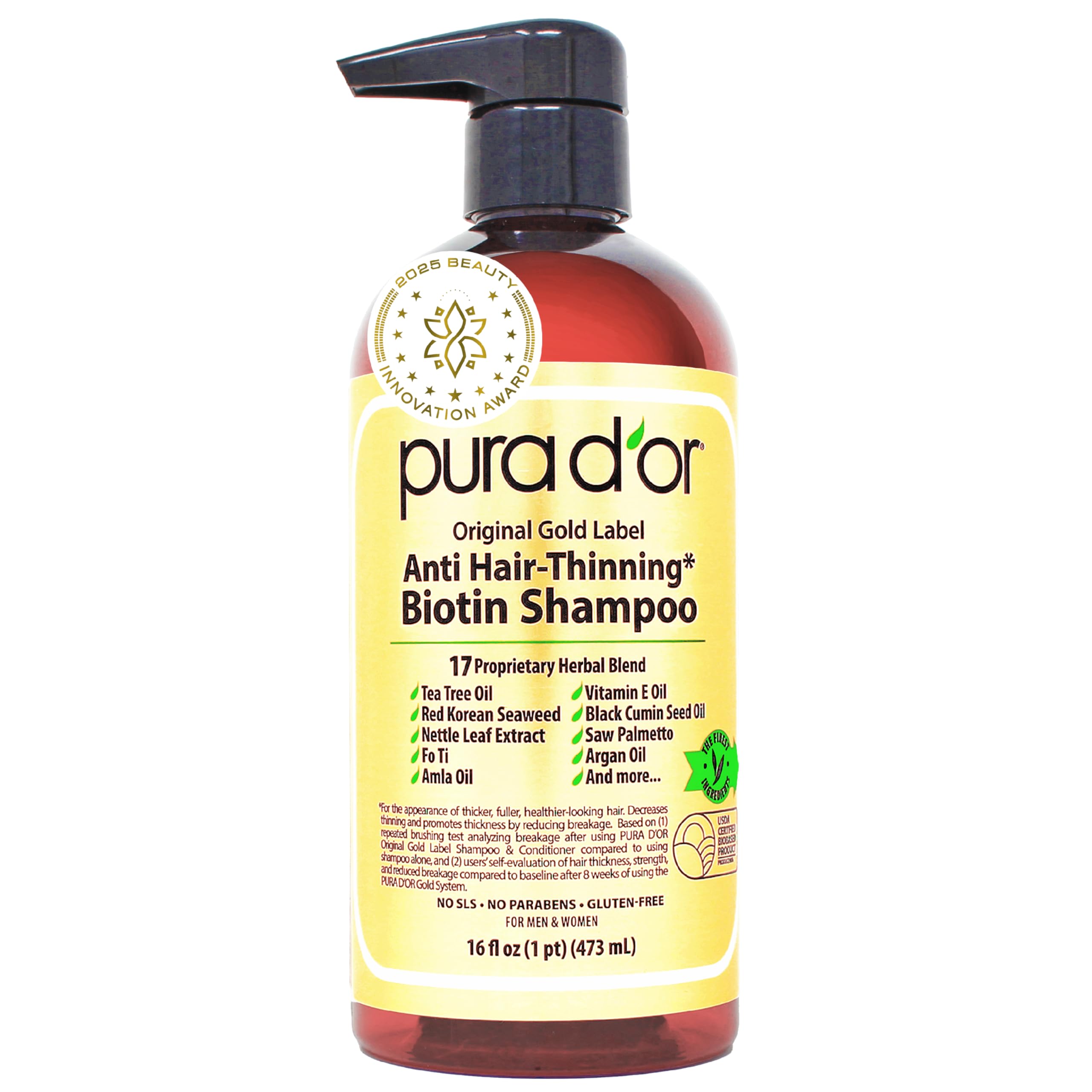
PURA D'OR Original Gold Label Anti-Thinning Shampoo
Biotin, saw palmetto & 17 DHT-blocking botanicals — the most-cited postpartum shampoo on Amazon
The most consistently recommended shampoo in postpartum communities, and the ingredient list backs it up. PURA D'OR combines biotin, saw palmetto, argan oil, red Korean seaweed, and 17 botanical DHT blockers in a sulfate-free, paraben-free, USDA organic-certified base. The DHT-targeting formula makes clinical sense for postpartum TE, where hormonal fluctuation is the root trigger. Lathers lightly and leaves fine postpartum hair feeling full without heaviness.
- Sulfate-Free
- Paraben-Free
- Vegan
- USDA Organic Certified Ingredients
- Color Safe
Pros
- 17 botanical DHT blockers
- Massive postpartum community trust
- Works on all hair types
- Award-winning formula
Cons
- Light natural earthy scent (not fully fragrance-free)
- Premium price point
#2 Runner Up
- Sulfate-Free
- Fragrance-Free
- Clinically Tested
- Breastfeeding Safe
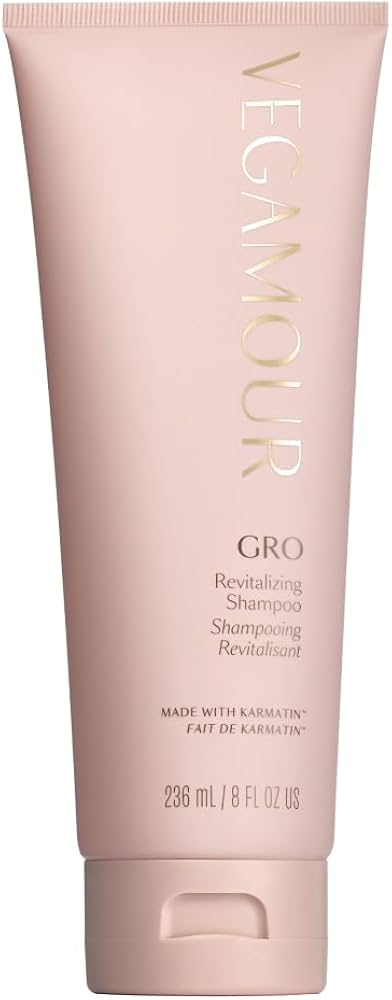
VEGAMOUR GRO Revitalizing Shampoo
Plant-based, clinically tested, 100% clean — with published results showing measurable shed reduction
Built on a proprietary phyto-actives complex including mung bean, red clover, and nicotinamide — which together reduce DHT sensitivity at the follicle level without hormone-disrupting synthetics. 100% vegan, silicone-free, and fully fragrance-free. VEGAMOUR publishes clinical results showing meaningful shed reduction over 90 days. The top choice for nursing moms who prioritize a clean-label, clinically-studied formula.
- Clinically Tested
- 100% Vegan
- Silicone-Free
- Fragrance-Free
- Fine Hair Friendly
Pros
- Published clinical shedding data
- Completely clean & fragrance-free
- Lightweight for fine hair
Cons
- Higher price (~$48)
- Full results take ~90 days
#3 Budget Pick
- Sulfate-Free
- Under $15
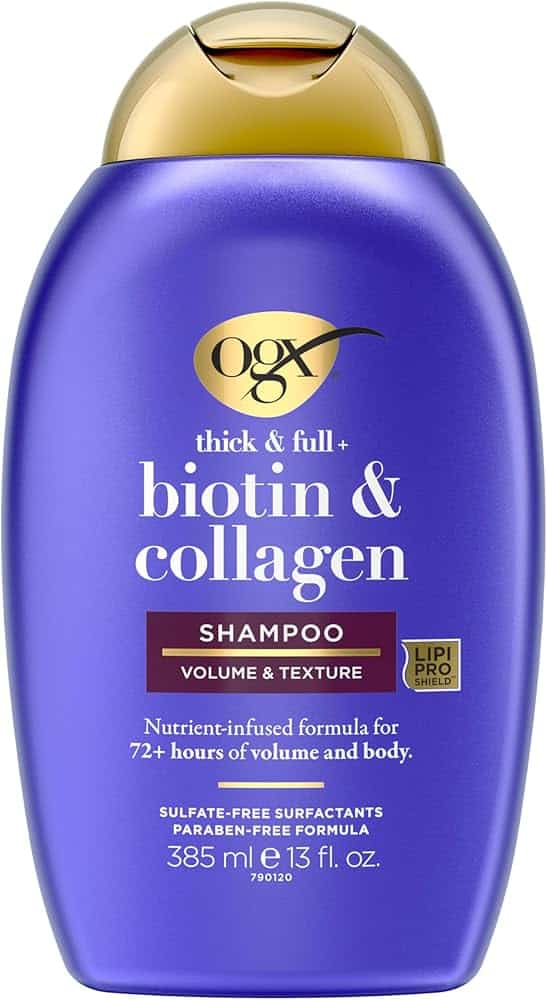
OGX Thick & Full Biotin & Collagen Shampoo
The best drugstore option — biotin + collagen in a gentle volumizing formula
Delivers biotin, hydrolyzed collagen, and vitamin B7 at an accessible price in a sulfate-free, paraben-free base. Collagen adds visible thickness to thinning strands — a cosmetic benefit that can make the postpartum shedding phase feel far less distressing. Contains a light fragrance, so very sensitive scalps may want to patch test first, but the overwhelmingly positive response from new moms makes it the top drugstore recommendation.
- Sulfate-Free
- Paraben-Free
- Biotin + Collagen
- Volumizing
Pros
- Excellent value under $15
- Biotin + collagen for visible thickness
- Widely available, easy to restock
Cons
- Contains light synthetic fragrance
- No DHT-blocking botanicals
#4 Sensitive Scalp
- 100% Fragrance-Free
- Dermatologist Tested
- Hypoallergenic
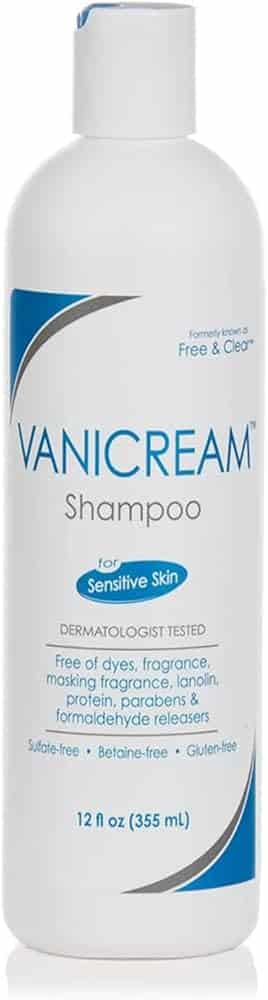
Vanicream Free & Clear Shampoo
The purest formula on this list — zero fragrance, zero dye, zero irritants of any kind
For postpartum moms whose scalps are reacting to everything — itching, flaking, or feeling tender (trichodynia) — Vanicream Free & Clear is the dermatologist's first recommendation. No fragrance, dye, parabens, formaldehyde releasers, or masking agents. It won't target DHT like picks 1 or 2, but it cleanses without causing any additional irritation — which is sometimes exactly what a reactive postpartum scalp needs first.
- 100% Fragrance-Free
- Dye-Free
- Gluten-Free
- Dermatologist Tested
Pros
- Zero irritants whatsoever
- Best for reactive / eczema-prone scalp
- Affordable and widely available
Cons
- No active hair growth ingredients
- Very basic sensory experience
#5 Curly Hair
- Sulfate-Free
- Moisture Boost
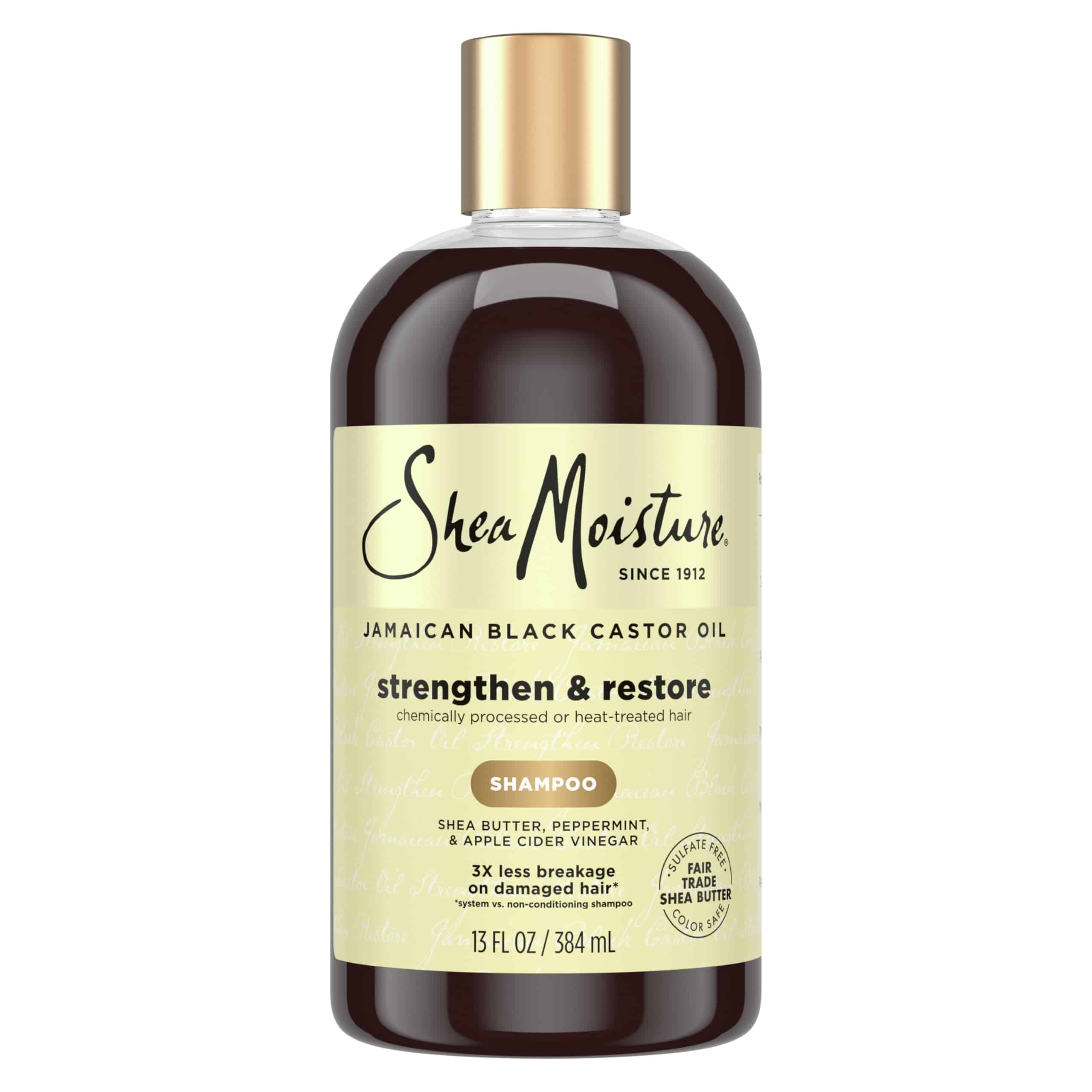
SheaMoisture Jamaican Black Castor Oil Strengthen & Restore Shampoo
For curly and coily postpartum hair that needs both moisture and shed reduction
Curly and coily textures face a unique postpartum challenge: distinguishing true TE shedding from dryness-induced breakage. SheaMoisture's JBCO formula addresses both — castor oil and peppermint provide deep moisture while the sulfate-free, paraben-free base protects the scalp. Added apple cider vinegar clarifies without stripping, and the formula delivers excellent slip for detangling fragile postpartum strands.
- Sulfate-Free
- Paraben-Free
- Castor Oil + Peppermint
- Apple Cider Vinegar
Pros
- Ideal for curly / coily textures
- Reduces both shedding and breakage
- Excellent detangling slip
Cons
- Too heavy for fine / straight hair
- Contains natural peppermint fragrance
#6 Luxury Pick
- Sulfate-Free
- Salon Quality
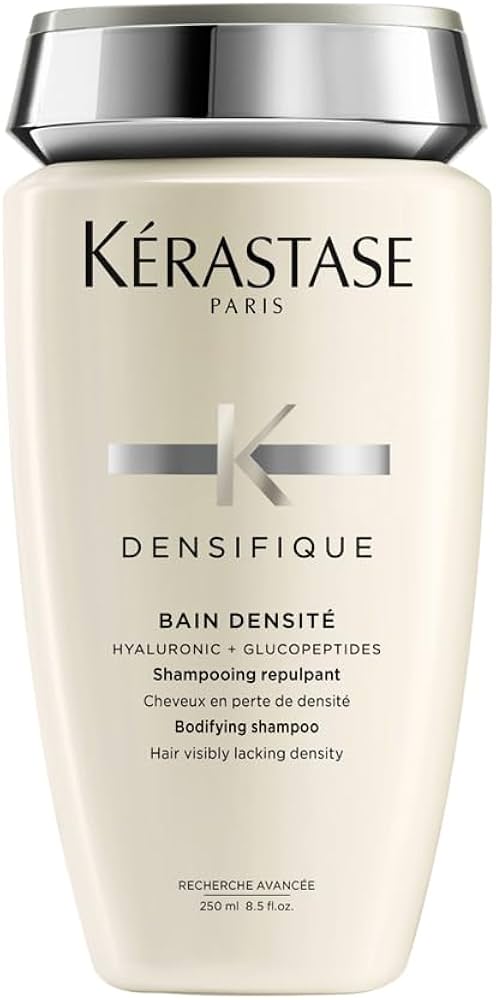
Kérastase Densifique Bain Densité Shampoo
Hyaluronic acid + Intra-Cylane technology for immediate, visible thickness
A salon-grade, sulfate-free formula with hyaluronic acid and a proprietary Intra-Cylane complex that visibly plumps each hair shaft — making thinning postpartum hair appear fuller almost immediately. Won't target the hormonal cause of TE, but the cosmetic density effect meaningfully reduces the visual and emotional impact while recovery progresses. Consistently recommended by hairstylists and dermatologists for postpartum volume.
- Sulfate-Free
- Hyaluronic Acid
- Intra-Cylane Technology
- Color Safe
Pros
- Immediate visible thickening
- Luxury salon-grade experience
- Hyaluronic acid for scalp hydration
Cons
- $50–65 price point
- Primarily cosmetic, not regrowth-focused
#7 Oily Scalp
- 1% Ketoconazole
- Use 2–3×/Week
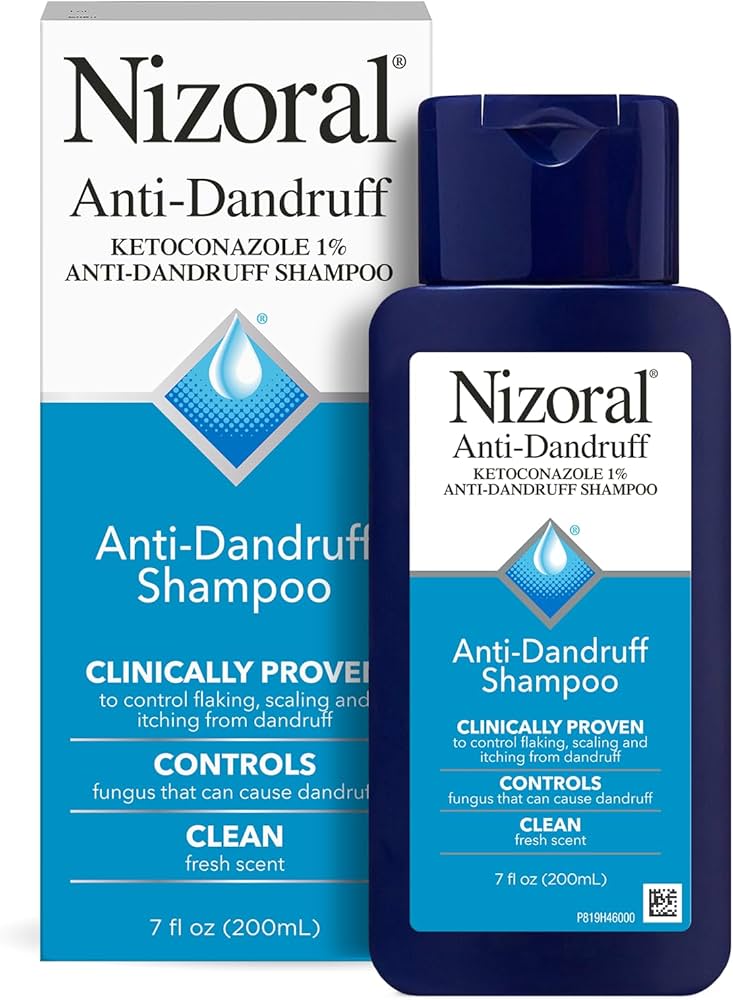
Nizoral A-D Anti-Dandruff Shampoo
For oily, inflamed postpartum scalps — clinically studied ketoconazole supports the follicle environment
Not a traditional hair loss shampoo, but dermatologists regularly recommend it for postpartum moms with an oily, inflamed, or dandruff-affected scalp alongside shedding. Its 1% ketoconazole reduces scalp inflammation and yeast overgrowth — both of which can compound TE shedding. Best used 2–3 times per week alternated with a gentler daily shampoo. Suitable for oily scalp types only — not for dry or sensitive scalps.
- 1% Ketoconazole
- Anti-Inflammatory
- Use 2–3×/Week
- OTC Formula
Pros
- Clinically studied active ingredient
- Reduces scalp inflammation effectively
- Inexpensive and accessible
Cons
- Not for dry or sensitive scalps
- Not for daily use
- Contains fragrance
Quick Comparison: All 7 Shampoos
Match your needs to the right product at a glance.
| Shampoo | Sulfate-Free | Fragrance-Free | DHT Blockers | Best For | Price |
|---|---|---|---|---|---|
| PURA D'OR Gold Label | ✓ | ✗ light | ✓ 17 | All hair types | ~$32 |
| VEGAMOUR GRO | ✓ | ✓ | ✓ phyto | Fine hair, clean formula | ~$48 |
| OGX Biotin & Collagen | ✓ | ✗ | ✗ | Budget, volume | ~$12 |
| Vanicream Free & Clear | ✓ | ✓ | ✗ | Sensitive / reactive scalp | ~$12 |
| SheaMoisture JBCO | ✓ | ✗ natural | ✗ | Curly / coily textures | ~$14 |
| Kérastase Densifique | ✓ | ✗ | ✗ | Luxury, instant volume | ~$58 |
| Nizoral A-D | ✗ | ✗ | ✗ | Oily / inflamed scalp | ~$17 |
Postpartum Hair Washing Routine Tips
The best shampoo won't deliver full results without the right habits around it:
Wash Frequency
2–3 times per week. Over-washing strips oils; under-washing clogs follicles with buildup.
Water Temperature
Lukewarm only. Hot water increases scalp inflammation and loosens telogen hair anchoring.
Scalp Massage
2–4 minutes while shampooing. Studies show regular massage increases dermal papilla thickness.
Pat Dry Gently
Pat — never rub. Wet postpartum hair is fragile; rubbing causes breakage that mimics shedding.
Wide-Tooth Comb
Detangle when damp or dry, starting at ends and working up. Never brush soaking wet hair.
Avoid Tight Styles
Tight buns and ponytails add traction alopecia — a separate, preventable form of hair loss.
Frequently Asked Questions
What causes postpartum hair loss?
After delivery, estrogen drops sharply. During pregnancy, high estrogen keeps hair in the active growth phase longer — producing the thick pregnancy hair many women notice. Once estrogen falls, many follicles shift into the telogen shedding phase simultaneously. This is called postpartum telogen effluvium and typically peaks around 3–4 months after delivery.
Is a gentle sulfate-free shampoo really better for postpartum hair loss?
Yes. Postpartum scalps are more reactive due to hormonal fluctuations. Sulfates strip the scalp's natural lipid barrier, triggering dryness, micro-inflammation, and irritation — all of which worsen shedding and prolong recovery. A gentle, sulfate-free formula won't stop the hormonal process, but it removes the chemical stress that makes it worse.
Are these shampoos safe while breastfeeding?
The top-ranked products — PURA D'OR, VEGAMOUR GRO, OGX Biotin & Collagen, and Vanicream — are sulfate-free, paraben-free, and considered safe for breastfeeding. Topical products can absorb through the scalp in small amounts, so always consult your OB or midwife if you have specific concerns about any new product while nursing.
How long does postpartum hair loss last?
Postpartum hair loss is temporary in nearly all cases. Shedding peaks around 3–4 months postpartum and resolves within 6–12 months as estrogen normalizes. If shedding continues beyond 12 months or is patchy rather than diffuse, consult a dermatologist to rule out thyroid dysfunction, iron deficiency, or other causes.
Will a shampoo alone stop postpartum shedding?
No shampoo fully stops the hormonal shedding phase. But the right shampoo reduces scalp stress, preserves existing hair, and creates the healthiest environment for regrowth. For best results, pair a gentle shampoo with regular scalp massage, a nutrient-dense postpartum diet, and consistent care over several months.
What's the difference between postpartum hair loss and regular hair loss?
Postpartum telogen effluvium (TE) causes diffuse, all-over shedding — not patchy loss — triggered by the hormonal shift after delivery. It causes no permanent follicle damage. This differs from androgenetic alopecia (pattern hair loss), which involves progressive follicle miniaturization, follows predictable patterns at the crown and temples, and requires different treatment.
How often should I wash my hair postpartum?
2–3 times per week is the general recommendation. Over-washing strips protective scalp oils and increases inflammation, worsening shedding. Under-washing allows sebum and product buildup that can block follicles. Use cool to lukewarm water, and apply conditioner only to the mid-lengths and ends — never directly on the scalp.