
Telogen Effluvium Symptoms
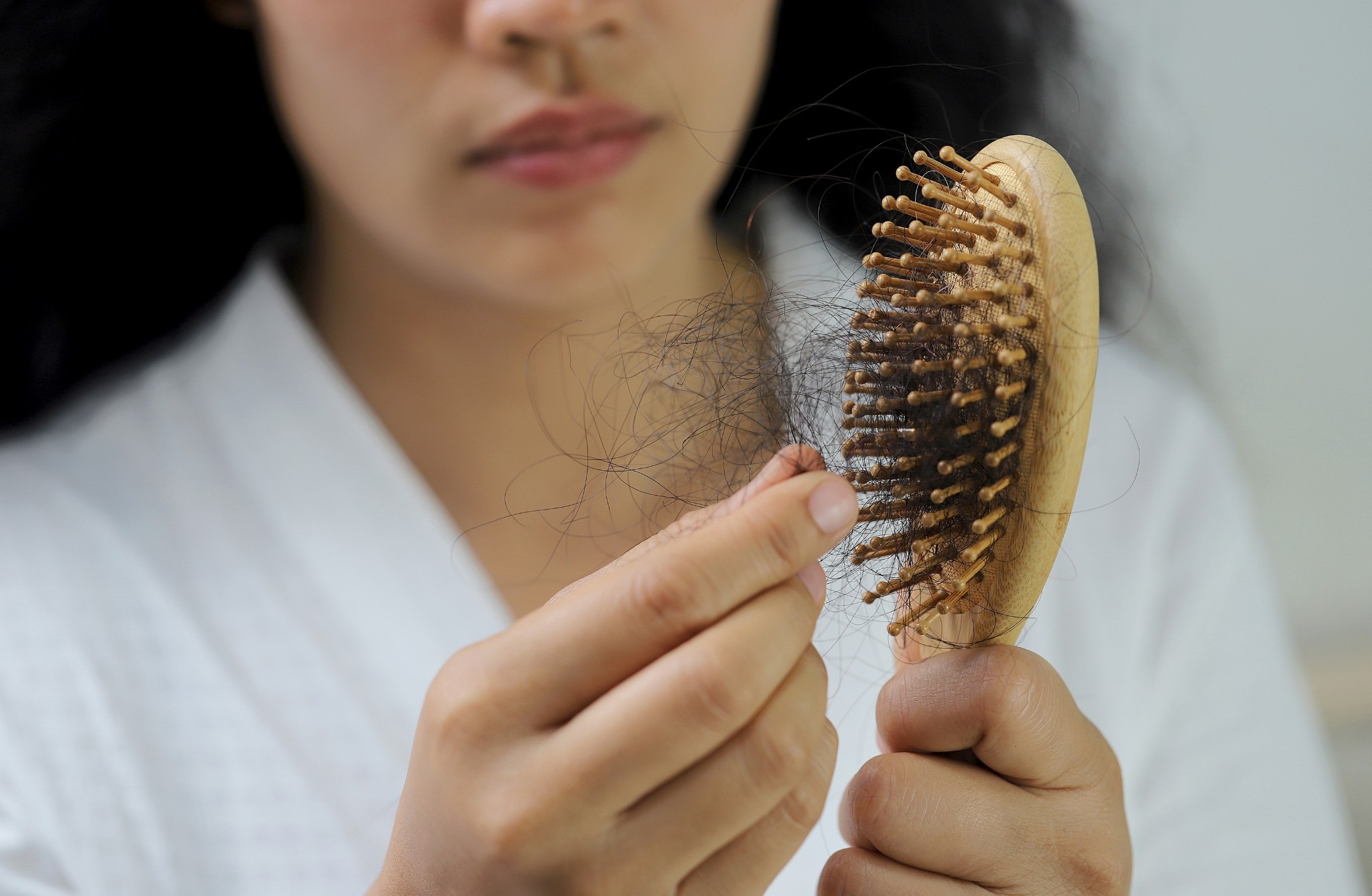
Telogen effluvium causes sudden, diffuse hair shedding, often noticed as increased hairs on pillows, in the shower, or in brushes. People may see a thinner ponytail, reduced volume, and more visible scalp or a wider part, especially on the crown. The scalp usually looks normal, without scarring or true bald patches, though some feel tenderness or burning (trichodynia). Symptoms typically follow illness, stress, childbirth, or weight loss, and understanding the pattern helps clarify what is happening.
Table of Contents
- Sudden, diffuse hair shedding with more hair on pillow, in shower, or on brush, often increasing to 200-300 hairs lost per day.
- Noticeable reduction in overall hair volume or ponytail thickness without distinct bald patches; scalp may look more visible under bright light.
- Onset typically occurs 2-3 months after a trigger such as major illness, surgery, childbirth, severe stress, rapid weight loss, or medication change.
- Scalp usually appears normal, with preserved frontal hairline and no scarring, redness, or prominent scaling.
- Some people experience trichodynia: scalp tenderness, burning, or discomfort around the time shedding begins.
What Telogen Effluvium Is and How It Affects the Hair Cycle
Although it can feel alarming to patients, telogen effluvium is a reversible hair-shedding disorder in which an abnormally high proportion of scalp hairs are prematurely shifted from the anagen (growth) phase into the telogen (resting) phase of the hair cycle.
Normally, 80-90% of hairs are in anagen and 10-15% in telogen. In telogen effluvium, altered follicle dynamics increase the telogen fraction to roughly 30% or more, shortening effective anagen duration for many follicles.
This accelerated telogen shift raises daily shedding from about 50-100 hairs to as many as 300 or more. Bulb morphology helps confirm the process: shed hairs typically show white “club” bulbs characteristic of telogen roots. When the trigger resolves, follicles gradually re-enter anagen and density recovers.
Telogen Effluvium Symptoms
Telogen effluvium most often becomes noticeable when a person sees a sudden increase in diffuse hair shedding including on the pillow, in the shower, or on the hairbrush, typically 2-3 months after a physical or emotional stressor.
Early signs include a subjective sense of reduced hair volume or thinner ponytail, while the scalp usually appears normal and the hairline is preserved.
Clinicians frequently use a gentle hair pull test, in which release of multiple club hairs with white telogen bulbs supports the diagnosis and helps distinguish telogen effluvium from other causes of hair loss.
Early Signs of TE
When telogen effluvium (TE) begins, one of the earliest signs is a sudden, noticeable increase in daily hair shedding often rising from a typical ~100 hairs per day to roughly 200-300, seen on pillows, in the shower drain, or on hairbrushes.
Shedding is diffuse, especially on the top of the scalp, without discrete bald patches or obvious hair miniaturization, and usually spares the frontal hairline.
Symptoms often appear 2-3 months after a trigger such as illness, surgery, childbirth, rapid weight loss, nutritional deficiencies, or major stress.
The scalp generally looks normal, though some individuals describe tenderness or trichodynia.
Early recognition helps distinguish TE from loss driven by genetic predisposition, chronic haircare mistakes, or scarring disorders, and can limit the psychological impact.
The Hair Pull Test
Evaluating telogen effluvium in clinical practice often includes a simple bedside maneuver called the hair pull test, which helps quantify active shedding from the scalp. The clinician gently tugs a bundle of 40-60 hairs close to the scalp; detachment of ≥4-6 hairs (or >10%) favors telogen effluvium, especially when club-shaped telogen bulbs are visible. Results guide expectations, preserve patient autonomy, and shape follow up timing.
Key considerations include:
-
Patient technique: At‑home pulls should be minimal to avoid over‑manipulation and anxiety.
-
Pediatric testing: Requires extra gentleness and clear explanation to children and caregivers.
-
Ethnic differences: Curl pattern and density affect hair sampling and interpretation.
-
Medication interference: Recent drugs, anesthetics, or chemotherapy can alter shedding patterns and require correlation with history.
Diffuse Shedding and Changes in Hair Volume
telogen effluvium symptoms
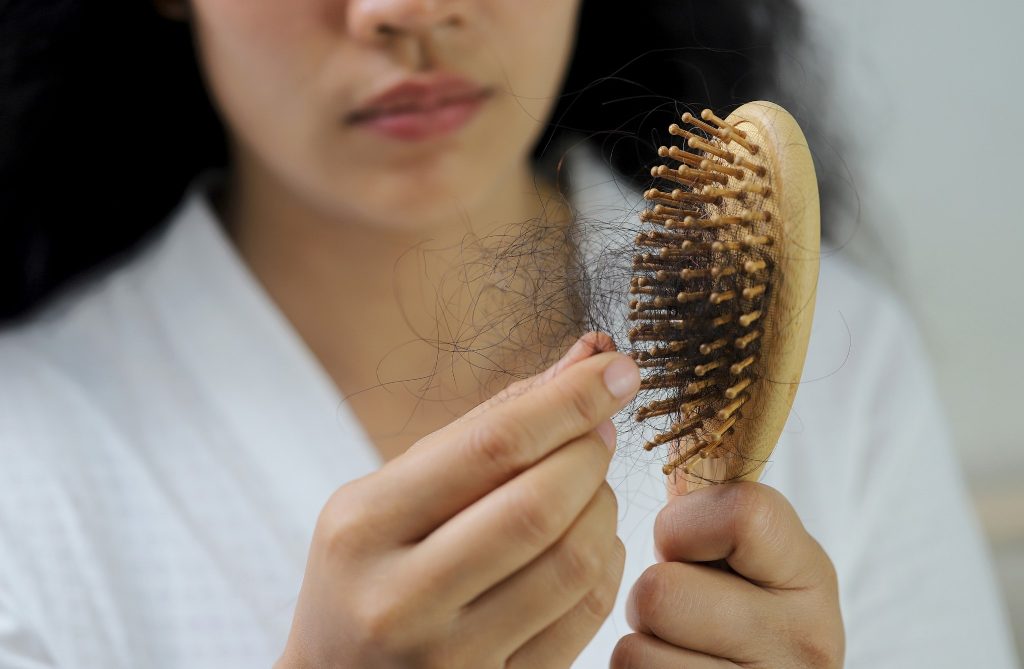
In telogen effluvium, hair loss typically presents as diffuse shedding with a perceived global reduction in hair volume rather than discrete bald patches.
Patients often report increased daily hair fall on pillows, in the shower, and on brushes along with a thinner ponytail or less “full” hair, especially over the top of the scalp.
This pattern of diffuse thinning, with a preserved hairline and a healthy-appearing scalp, helps distinguish telogen effluvium from other forms of alopecia.
Telogen Effluvium & Diffuse Thinning
Telogen effluvium most often presents as diffuse, generalized thinning rather than discrete bald spots, with patients noticing a clear rise in daily shedding from typical levels (about 50 to 100 hairs) to roughly 200-300 hairs per day.
Hair volume feels lighter, individual hair shaft density is reduced, and subtle texture changes may occur, sometimes amplified by aggressive hair styling or underlying vitamin deficiencies.
The scalp usually appears healthy, with a stable scalp microbiome and shed hairs showing white club bulbs.
Key clinical observations include:
- Thinning most visible over the top and crown, with the frontal hairline usually preserved.
- Shedding typically starts 2-3 months after a trigger.
- Loss may extend to eyebrows or body hair in severe cases.
- No scarring or true bald patches develop.
Scalp Sensations: Tenderness, Burning, and Discomfort
Patients with telogen effluvium frequently describe uncomfortable scalp sensations such as tenderness, aching, or a burning feeling (trichodynia) that occur alongside increased hair shedding. These symptoms are thought to involve altered scalp nerve signaling, with heightened pressure sensitivity and, in some individuals, temperature triggers such as hot showers or blow-drying. Sensory mapping by patients often reveals localized “hot spots” of discomfort despite a normal-appearing scalp.
Trichodynia is typically a pain, stinging, or non-itchy discomfort that emerges around the onset of shedding and may persist while hair loss continues. Proposed mechanisms include low-grade peri-follicular inflammation, sensitized nerve endings, and the impact of psychological stress. Management emphasizes addressing triggers, gentle hair practices, topical soothing options, simple analgesics when needed, and strategies that support stress relief and autonomy.
Visual Changes in Hair Density and Part Lines
Amid the early course of telogen effluvium, visual changes most often appear as a general reduction in hair density rather than focal bald spots.
Thinning is diffuse, so the midscalp and crown look lighter, while the frontal hairline is usually preserved.
Under stronger scalp lighting, increased root visibility and reduced part contrast make the part line appear broader.
Because individual hairs remain normal in calibre, the overall effect is a translucent look rather than patterned recession.
People often notice changes when styling: hair fluffing creates less volume, and ponytail circumference shrinks.
Key at‑home observations include:
- Widening central part line.
- More scalp showing with bright light or color contrast.
- Smaller ponytail thickness.
- Thinner appearance when hair is gathered back.
Telogen Effluvium & Hair Shedding Patterns
In many cases of telogen effluvium, hair shedding follows a characteristic diffuse pattern rather than forming discrete bald patches.
Daily loss often rises from a normal 50-100 hairs to 200-300 or more, with hair seen on pillows, clothing, and in the shower.
The hair shaft typically appears intact, ending in a white “club” bulb that reflects premature entry into the telogen phase.
Shedding cycles develop so that hair comes out easily in handfuls with light traction.
Density is most reduced over the top of the scalp, while the frontal hairline is usually preserved.
When nutritional deficits, sleep disturbance, or other systemic stressors persist, shedding can feel relentless and may extend to eyebrows or body hair, intensifying the emotional impact.
Telogen Effluvium & Seasonal and Post-Trigger Shedding
Beyond the diffuse shedding pattern itself, telogen effluvium is strongly shaped by timing, with many individuals noticing a sharp rise in hair fall about 2 to 3 months after a trigger such as significant illness, surgery, childbirth, major psychological stress, or rapid weight loss.
During post-trigger episodes, daily loss may rise to 200-300 hairs, often forming visible clumps while the scalp still looks normal.
Seasonal triggers add another layer: many notice autumn shedding, reflecting mild fluctuations in population patterns rather than personal failure or loss of control.
This seasonal telogen effluvium is usually self-limited.
Key practical points include:
- Recognizing delayed onset after triggers.
- Expecting 3-6 months of active shed.
- Monitoring for gradual regrowth.
- Using preventive strategies to minimize new triggers.
Telogen Effluvium After Illness, Pregnancy, or Stress
Following a significant illness, childbirth, or period of severe psychological stress, many individuals develop telogen effluvium, a form of diffuse hair shedding that typically begins 2 to 3 months after the triggering event. Daily loss may rise to 200 to 300 hairs, with more strands seen on pillows, in drains, and on brushes, yet the scalp skin remains normal and lacks bald patches.
After delivery, postpartum telogen effluvium often emerges at 2-4 months, prompting many to seek postpartum counseling that validates the temporary nature of this shedding. Illness- or stress‑related cases similarly improve as health stabilizes.
Supportive strategies include nutritional supplementation when deficiencies exist, gentle scalp massage, structured stress management, and consistent sleep hygiene help individuals feel more in control while natural regrowth occurs over subsequent months.
How Telogen Effluvium Differs From Pattern Baldness
Many people who notice shedding after illness, pregnancy, or stress worry that it signals permanent “pattern baldness,” yet telogen effluvium behaves very differently from androgenetic hair loss.
Telogen effluvium (TE) produces abrupt, diffuse shedding, often 2-3 months after a stressor, while androgenetic alopecia (AGA) advances slowly and predictably.
Key distinctions include:
-
Pattern – TE causes global thinning with a preserved hairline; AGA shows patterned recession or vertex thinning driven by genetic predisposition and hormonal interactions.
-
Hair physiology – TE sheds telogen “club” hairs; AGA shows follicular miniaturization and altered diagnostic biomarkers on dermoscopy or biopsy.
-
Course – TE is usually reversible within defined treatment timelines; AGA is chronic.
-
Psychological impact – TE’s sudden loss can be alarming yet is often temporary, supporting informed, autonomy‑focused decisions.
When Symptom Patterns Suggest You Should See a Specialist
In the context of telogen effluvium, certain symptom patterns indicate that evaluation by a dermatologist or other hair‑loss specialist is warranted rather than continuing to watch and wait.
Persistent diffuse shedding beyond six months, sudden loss of handfuls of hair, or daily counts near 200-300 hairs signal when to see a clinician for possible specialist referral.
Concerning signs include scalp redness, scaling, pain, patchy loss, or signs of endocrine disturbance such as fatigue, weight change, irregular periods, or thyroid symptoms.
Recent major illness, surgery, childbirth, medication changes, or rapid weight loss plus ongoing shedding also justify consultation.
Patients may explore insurance questions, telemedicine options, and, when systemic disease is suspected, multidisciplinary care involving endocrinology or primary care.
TE Signs FAQs
Can Telogen Effluvium Cause Changes in Hair Texture, Curl Pattern, or Frizz?
Telogen effluvium rarely alters intrinsic hair texture or curl pattern; perceived frizz and poorer frizz control usually reflect shorter, regrowing hairs and altered strand porosity, without true follicle miniaturization as seen in androgenetic alopecia limiting styling freedom.
Does Telogen Effluvium Affect Eyebrows, Eyelashes, or Body Hair as Well?
Like a distant echo, telogen effluvium can sometimes affect eyebrows, eyelashes, and body hair, causing eyebrow thinning, mild eyelash loss, or localized shedding; when it occurs, evidence suggests a favorable regrowth timeline, often within several months.
How Long Does It Usually Take for Hair to Look Normal Again?
Hair usually looks normal again within 6-12 months. Recovery timeline varies; early regrowth milestones appear at 3 to 4 months, with possible seasonal variation. Psychological impact can be significant, so follow up care focuses on reassurance, monitoring, and modifiable triggers.
Can Nutritional Supplements Actually Reduce Telogen Effluvium Shedding?
Yes, if dietary deficiencies exist, targeted supplements can reduce telogen effluvium shedding; effectiveness depends on correcting proven deficits, considering supplement interactions, optimizing micronutrient timing and bioavailability forms, and minimizing adherence barriers through simple, patient-tailored regimens checked by laboratory monitoring.
Is It Safe to Color, Perm, or Chemically Treat Hair During Telogen Effluvium?
It is generally safer to avoid chemicals during active shedding; coincidence of fragility and harsh processing risks breakage. Clinicians advise waiting recovery, performing strand testing, monitoring scalp sensitivity, and seeking professional consult to individualize timing and technique of coloring or perming.