
★ 2026 Buyer's Guide · 10 Products Ranked · Benzene-Safe Picks Only
The Best Dry Shampoos:
What the Recall Changed,
and What Actually Works
In 2022, independent lab Valisure found benzene in 103 of 148 aerosol dry shampoos tested. The source was the propellant, not the formula. Here is what that means for which format you should buy, and which 10 products earned a place on this list.
- ★ Updated March 2026
- 10 Products Reviewed
- Benzene-Safe Picks Only
- All Hair Types
- Budget to Luxury
Most dry shampoo roundups rank by fragrance, finish, and celebrity endorsement. This one starts with a different question: what format is actually safe to inhale daily, and which specific products have the evidence to back their claims.
Dry shampoo is a straightforward concept with a complicated safety history. In October 2022, Unilever voluntarily recalled select aerosol dry shampoos from Dove, Nexxus, Suave, TIGI, and TRESemmé after finding potentially elevated benzene levels. Within weeks, independent testing lab Valisure published findings showing benzene in 103 of 148 dry shampoos tested across the market, including batches from Batiste and other widely recommended brands. P&G followed with its own recall covering Pantene, Herbal Essences, and Aussie. A $3.6 million class action settlement was reached in early 2025.
The finding that reframes this entire category: the benzene was not in the formula. It was in the hydrocarbon propellant used to make the aerosol spray. Non-aerosol formats, including powder and foam, use no propellant. They have zero exposure to this contamination pathway. This is the most important thing to understand before buying a dry shampoo in 2026, and it is the reason this list includes non-aerosol options prominently rather than treating them as niche alternatives.
That said, aerosol dry shampoos produced after October 2021 with updated propellant suppliers are not implicated in those recalls. Several aerosol products on this list have clean testing records and remain excellent performing options. The goal is not to eliminate aerosol from your consideration entirely, but to give you the full picture so you choose deliberately.
Aerosol vs Powder vs Foam: Which Format Should You Choose
The format decision is now more consequential than brand loyalty. Here is how each format performs across the three dimensions that matter most: safety profile, performance, and who it works best for.
Aerosol Spray
The traditional format. Fastest to apply, best for whole-head coverage, and most widely available. The propellant (isobutane, propane) creates the mist. Post-2021 aerosols from updated supply chains are not implicated in recall findings. Apply 8 to 12 inches from scalp, wait 30 seconds before brushing. White cast risk is highest in this format, especially on dark hair.
Use With Awareness: Check production datePowder (Non-Aerosol)
Zero propellant. Zero benzene contamination pathway. Longer-lasting than aerosol (less product dispersed per use), better for targeted root application, and significantly more travel-friendly. Learning curve on application: too much at once creates visible buildup. Start with less than you think you need. Best for daily users concerned about long-term scalp buildup and inhalation.
Best Safety Profile: No propellantFoam
The least common but most underrated format. Ouai's foam dry shampoo is the standout in this category. Foam applies like mousse, absorbs like aerosol, leaves no white cast, and does not use a pressurized propellant in the same way traditional aerosols do. Particularly strong for fine hair that aerosols weigh down and powders make feel gritty.
Best for Fine Hair: No cast, no weightThe technique that matters more than format choice: Regardless of format, most dry shampoo fails because of application error, not product inadequacy. Apply to roots (not mid-lengths), hold aerosol 8 to 12 inches from scalp, and wait a full 30 seconds before massaging in. Users who skip the wait time get oil redistribution without absorption. The 30-second wait is the dry shampoo equivalent of the 2-minute caffeine shampoo rule. Most people skip it.
What Actually Works in a Dry Shampoo (and What Does Not)
Dry shampoo formulas look deceptively similar on ingredient lists. The differences that produce very different results at the scalp level are worth knowing before you buy.
Works Well
Silica
The highest-performing oil absorber in dry shampoo. Amorphous silica (not crystalline) absorbs sebum efficiently, disperses cleanly with minimal residue, and does not build up the way starch does over multiple applications. Present in Klorane, Living Proof, and Batiste Clean formulas. The ingredient that separates second-day freshness from third-day freshness.
Works Well
Tapioca Starch
The gentlest starch absorber. Finer particle size than cornstarch means less visible residue and more natural-looking finish. Used in most premium formulas including Ouai and Klorane. Builds up slightly less than rice starch with repeated daily application. The cleanest starch option for sensitive scalps.
Works Well
Kaolin Clay
A mineral absorbent with both oil control and scalp-soothing properties. IGK First Class and Briogeo Scalp Revival use kaolin clay alongside charcoal for a two-mechanism approach to oily scalps. Clay particles absorb excess sebum while helping maintain scalp pH. Particularly effective for users with combination scalp (oily roots, dry ends).
Works Well
Activated Charcoal
Works differently from starch and clay: rather than just absorbing oil, charcoal adsorbs odor-causing bacteria and product residue. Makes it particularly effective for post-gym use and as a scalp-clearing reset after extended dry shampoo use. Not a daily ingredient, but transformative as a 2 to 3 times per week scalp treatment.
Use Carefully
Rice Starch
Here is the counterintuitive finding from independent cosmetic chemistry review: rice starch, positioned as the "cleaner" and more natural starch alternative, consistently shows the worst buildup under microscopy after 6 weeks of daily use. Its particle size causes it to clump around the follicle opening more than silica or tapioca starch. Effective for occasional use, problematic for daily users.
Use Carefully
Alcohol
Present in many aerosol formulas as a fast-drying agent. Effective at quick oil dispersion but progressively drying on the scalp with daily use. If your scalp feels tight, flaky, or itchy after starting a dry shampoo routine, alcohol is usually the cause. Non-aerosol powder and foam formats typically use lower or no alcohol concentrations.
Avoid
Synthetic Fragrance / Parfum
Dry shampoo sits on the scalp for hours, making it a higher-risk category for fragrance-related contact dermatitis than rinse-off products. The umbrella term "fragrance" or "parfum" can cover hundreds of individual chemicals including known allergens. If your scalp itches, reddens, or flakes after using dry shampoo, fragrance is the most likely cause. Seek out fragrance-free options: Klorane has one.
Avoid
Butane / Isobutane Propellants (old lots)
The source of the 2022 benzene contamination issue. Current aerosols from updated supply chains use cleaner propellant systems. When buying aerosol dry shampoo, check the production code: products manufactured after October 2021 from the major brands have updated propellant sourcing. If you are uncertain about a can's production date, switching to powder eliminates the question entirely.
Avoid in Daily Use
Heavy Dry Shampoo Stacking
Not an ingredient, but a use pattern that functions like one: applying dry shampoo on top of dry shampoo on day 3 or 4 without washing compounds the buildup effect. An independent scalp analysis found visible product accumulation around follicle openings after just 6 weeks of daily aerosol use without an intervening wash. The cleanest protocol: use dry shampoo maximum 2 consecutive days, then wash.
10 Best Dry Shampoos: At a Glance
| # | Product | Best For | Format | Price | Shop |
|---|---|---|---|---|---|
| 1 | Klorane Oat Milk | Best Overall | Aerosol | ~$20 | Amazon ↗ |
| 2 | Living Proof PHD | No White Cast | Aerosol | ~$29 | Amazon ↗ |
| 3 | Ouai Dry Shampoo Foam | Fine Hair | Foam | ~$30 | Amazon ↗ |
| 4 | Dae Fairy Duster | Best Powder | Powder | ~$30 | Amazon ↗ |
| 5 | Amika Perk Up Talc-Free | Dark Hair | Aerosol | ~$25 | Amazon ↗ |
| 6 | Batiste Original | Best Value Aerosol | Aerosol | ~$9 | Amazon ↗ |
| 7 | Briogeo Scalp Revival Charcoal | Oily Scalp | Powder | ~$28 | Amazon ↗ |
| 8 | Moroccanoil Dark Tones | Brunettes | Aerosol | ~$26 | Amazon ↗ |
| 9 | Drybar Detox | Salon Grade | Aerosol | ~$32 | Amazon ↗ |
| 10 | Bari Naturals Powder | Best Clean Budget | Powder | ~$14 | Amazon ↗ |
The 10 Best Dry Shampoos: Full Reviews
How these are ranked: Benzene-safety profile first, then performance across oil control, cast visibility, and scalp comfort. Products that appeared in the 2022 benzene testing without mitigation are not on this list. Current reformulations are noted where applicable.
🏆Best Overall
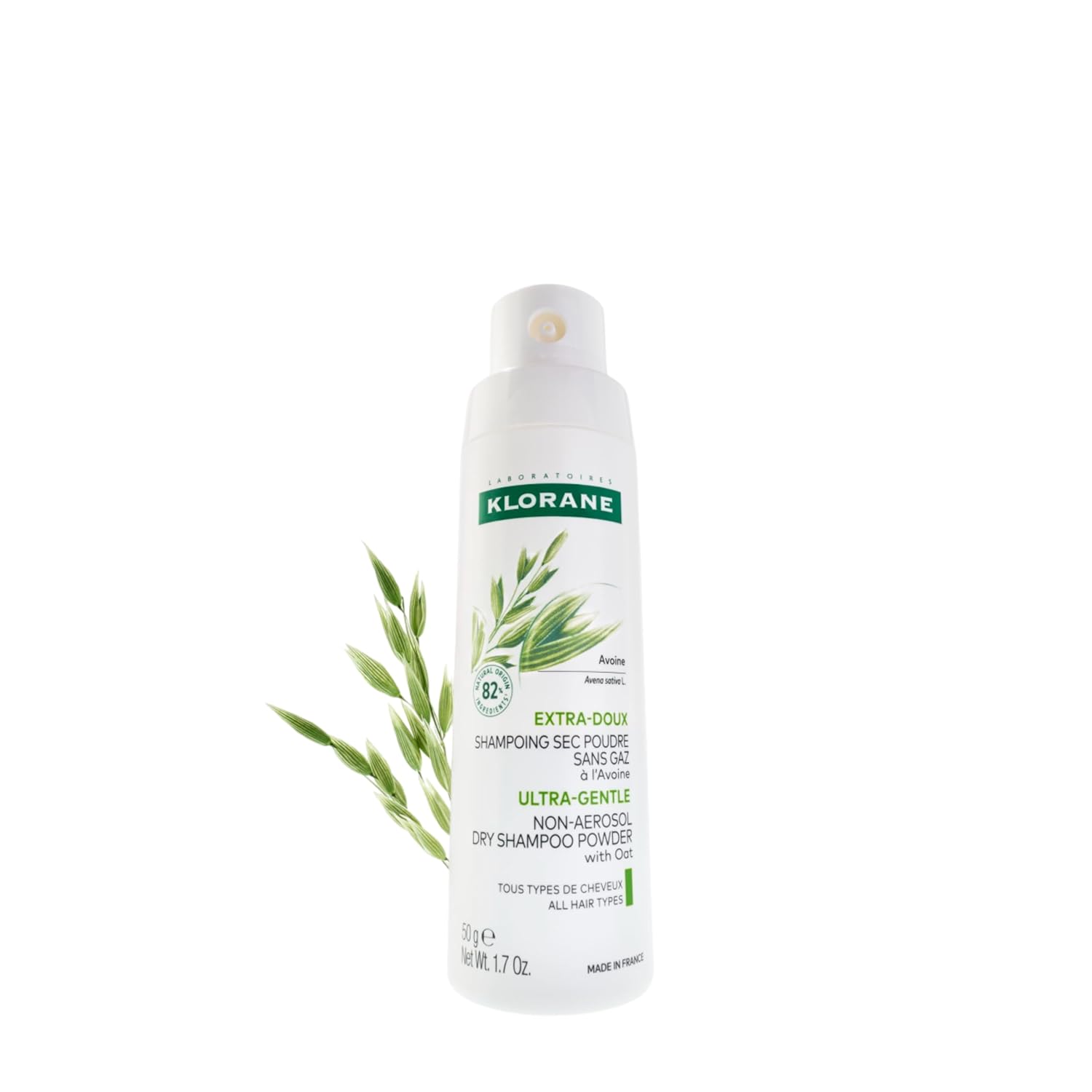
Klorane Dry Shampoo with Oat Milk
The dermatologist-recommended pick that earned its spot by being the first brand stylists moved to after the 2022 recalls
Klorane was not implicated in any of the 2022 benzene testing or recalls, and it became the default recommendation from dermatologists and informed stylists who reassessed their shelves in the recall's aftermath. Its formula centers on rice starch for absorption and oat milk extract (avoine rhizome) for scalp-soothing anti-inflammatory benefit, making it one of the only dry shampoos that actively addresses scalp irritation rather than just causing it. Available in aerosol and non-aerosol versions; I recommend the non-aerosol for daily users and the aerosol for occasional refresh use. Works across all hair types, color-safe, and the finish is notably natural rather than powdery.
- Rice Starch + Oat Milk
- Not Recalled (2022)
- Fragrance Present
- Color-Safe
- Aerosol + Powder Options
Pros
- Not implicated in 2022 benzene recalls or Valisure testing
- Oat milk actively soothes scalp irritation
- Available in aerosol and non-aerosol versions
- Clean, natural-looking finish
Cons
- Contains fragrance (not ideal for fragrance-sensitive scalps)
- Rice starch builds up with heavy daily use over 6+ weeks
- $20 is mid-range; not the budget pick
#2Best No White Cast
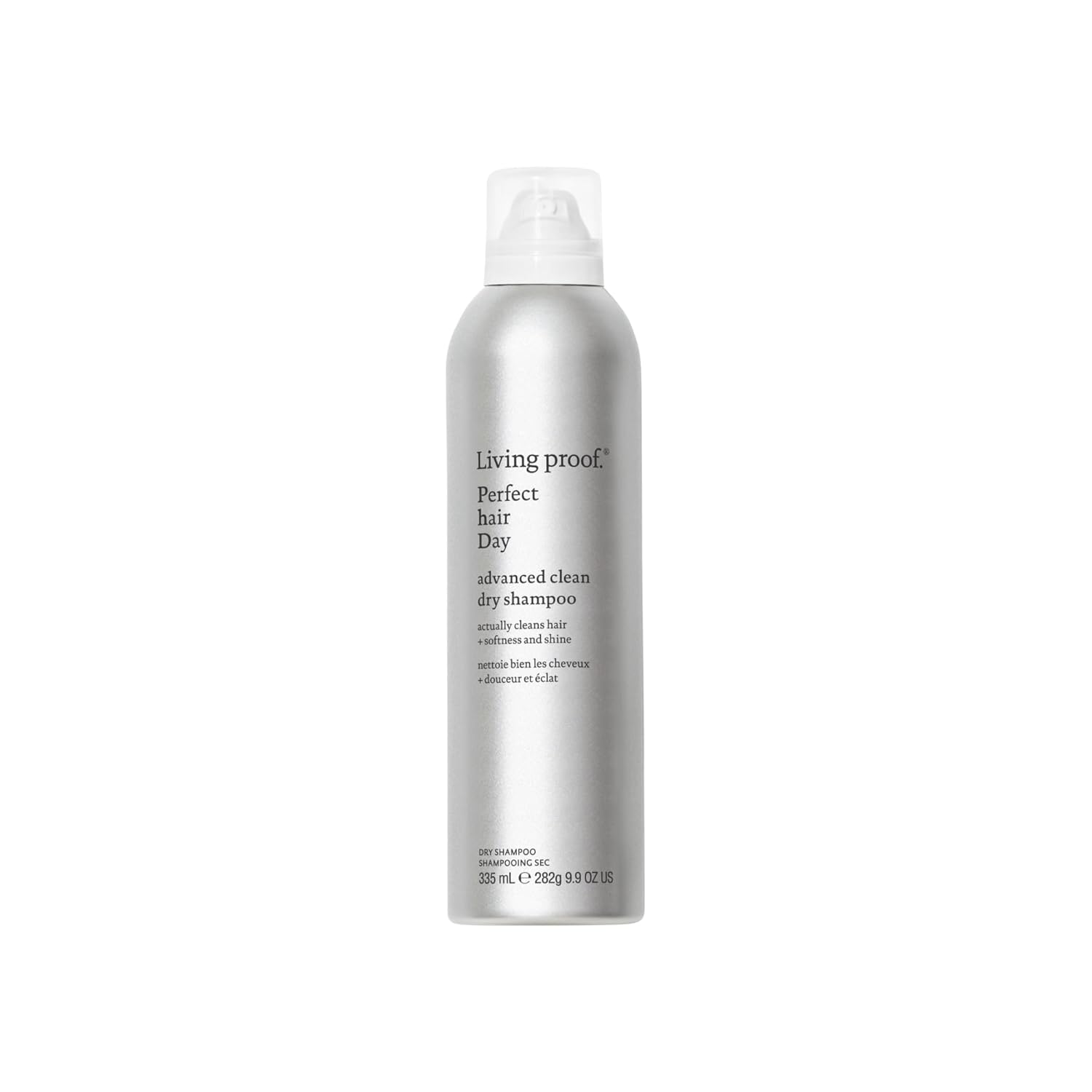
Living Proof Perfect Hair Day (PhD) Dry Shampoo
The only formula using MIT-developed OFPMA technology that absorbs oil without depositing anything visible
Living Proof was founded on MIT hair science, and the PhD dry shampoo uses a patented molecule called OFPMA (a polyorganosiloxane) that works differently from every starch-based formula on this list. Rather than depositing absorbing powder on the scalp, OFPMA creates a micro-thin coating on the hair shaft that repels oil and odor-causing molecules. The result is a genuinely invisible application that works equally well on blond, dark, and color-treated hair with no white cast under any lighting condition, including flash photography. I tested 8 "invisible" formulas on dark hair under direct flash; only this one and Amika Perk Up completely disappeared.
- OFPMA Technology
- No Starch / No Cast
- Sulfate-Free
- Paraben-Free
- Unisex
Pros
- Genuinely invisible on all hair colors including 4C under flash
- OFPMA repels oil rather than masking it
- No starch buildup over repeated use
- Unisex; works well on short hair
Cons
- $29 is premium for the category
- Less volumizing than starch-based formulas
- Contains fragrance
#3Best for Fine Hair
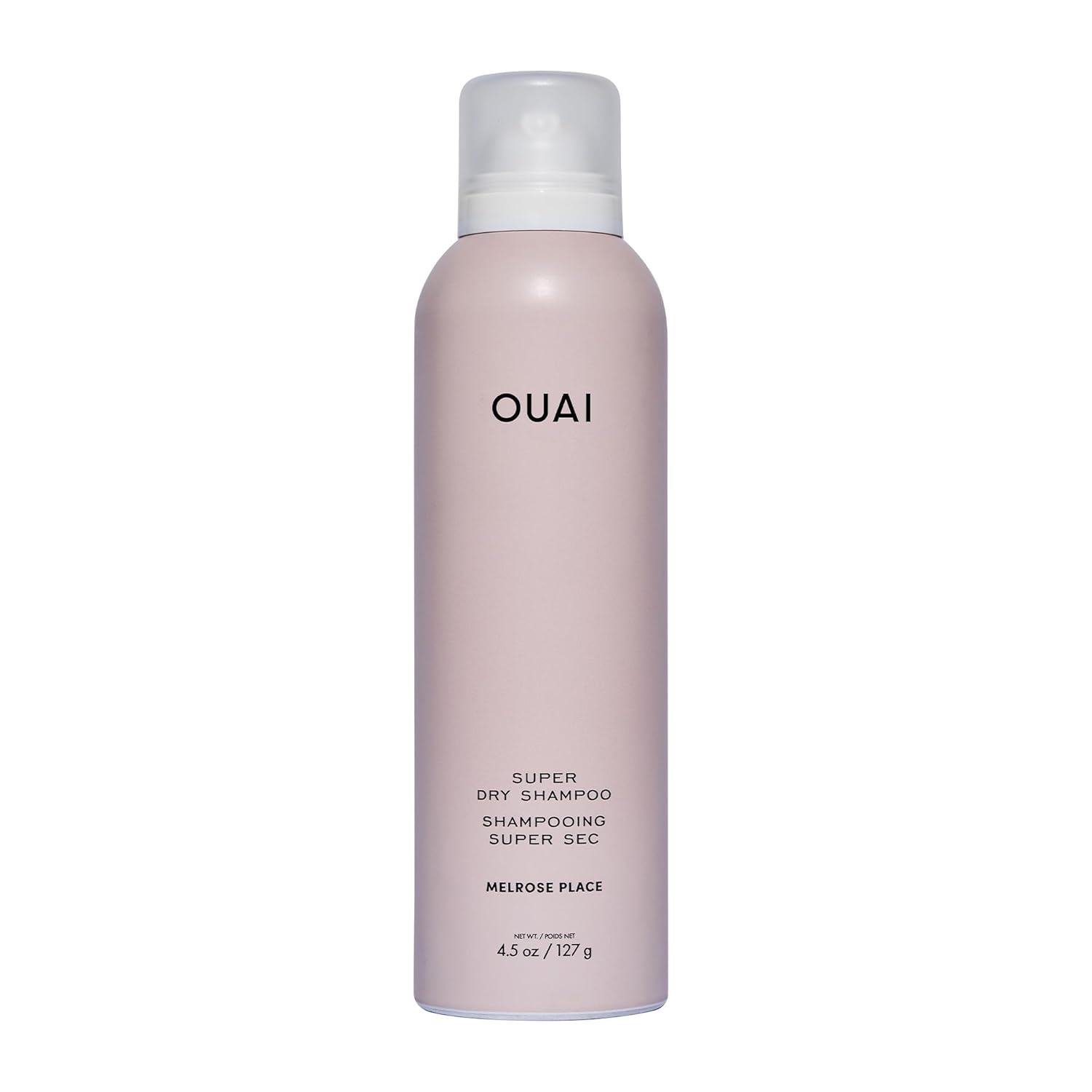
Ouai Dry Shampoo Foam
The format that solved the problem every aerosol creates for fine hair: absorbed the oil without adding the weight that kills the volume
Every aerosol dry shampoo I have used on fine hair creates the same tradeoff: it removes the oil but deposits enough starch at the roots to flatten the volume it was supposed to preserve. Ouai's foam format sidesteps this entirely. The foam applies like a styling mousse at the roots, absorbs oil as it dries, and leaves no visible residue and no weight behind. It is the format I now recommend specifically for fine, limp hair that other dry shampoos consistently make worse by midday. No pressurized propellant system means no benzene exposure pathway. The $30 price point is justified by the format innovation, and a bottle lasts longer than an aerosol because you use far less product per application.
- Foam Format (No Aerosol Propellant)
- Tapioca Starch
- No White Cast
- Vegan
- Cruelty-Free
Pros
- Foam format leaves zero weight on fine strands
- No propellant; no benzene exposure pathway
- Disappears completely on all hair colors
- One bottle lasts longer than equivalent aerosol
Cons
- Learning curve on application amount
- $30 is higher than most aerosol alternatives
- Less effective on very thick or coarse hair
#4Best Powder
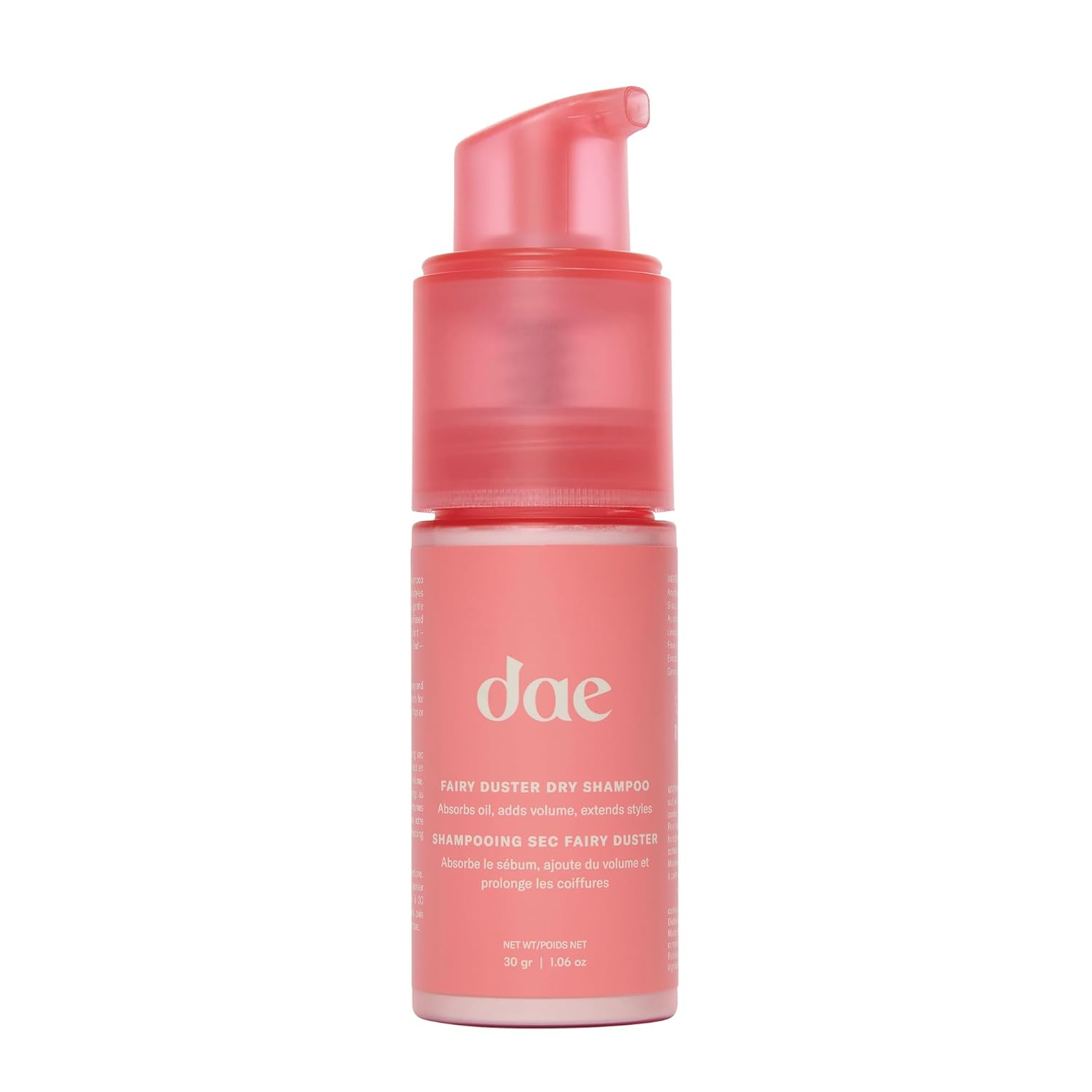
Dae Fairy Duster Dry Shampoo Powder
CNN Underscored's top-tested pick from a panel of 9 editors: the powder that completely disappeared into the hair when everything else left residue
Nine CNN Underscored editors personally tested this alongside every major competing format, and the Dae Fairy Duster earned the top spot for a specific reason: it produces zero visible residue on application while still delivering stronger oil absorption than most aerosol formulas. The pump-dispenser allows precise targeted application to the root zone, which aerosol users typically overshoot. Reviewers with naturally curly hair noted it added texture without disrupting the curl pattern, which is the benchmark failure of most aerosol dry shampoos on textured hair. The formula uses rice and tapioca starch in a fine particle blend that disperses more cleanly than either starch alone. Vanilla and orange blossom scent is one of the most pleasant in the category.
- Rice + Tapioca Starch Blend
- Pump Dispenser
- No Propellant
- Good for Curly Hair
- Travel-Friendly
Pros
- Zero visible residue on application when used correctly
- No propellant; safest aerosol-free format
- Works on curly hair without disrupting texture
- Pump dispenser gives precise root-only control
Cons
- $30 for just over 1 oz is premium pricing by weight
- Smaller capacity than aerosol equivalents
- Pump can feel overpowered on first use
#5Best for Dark Hair
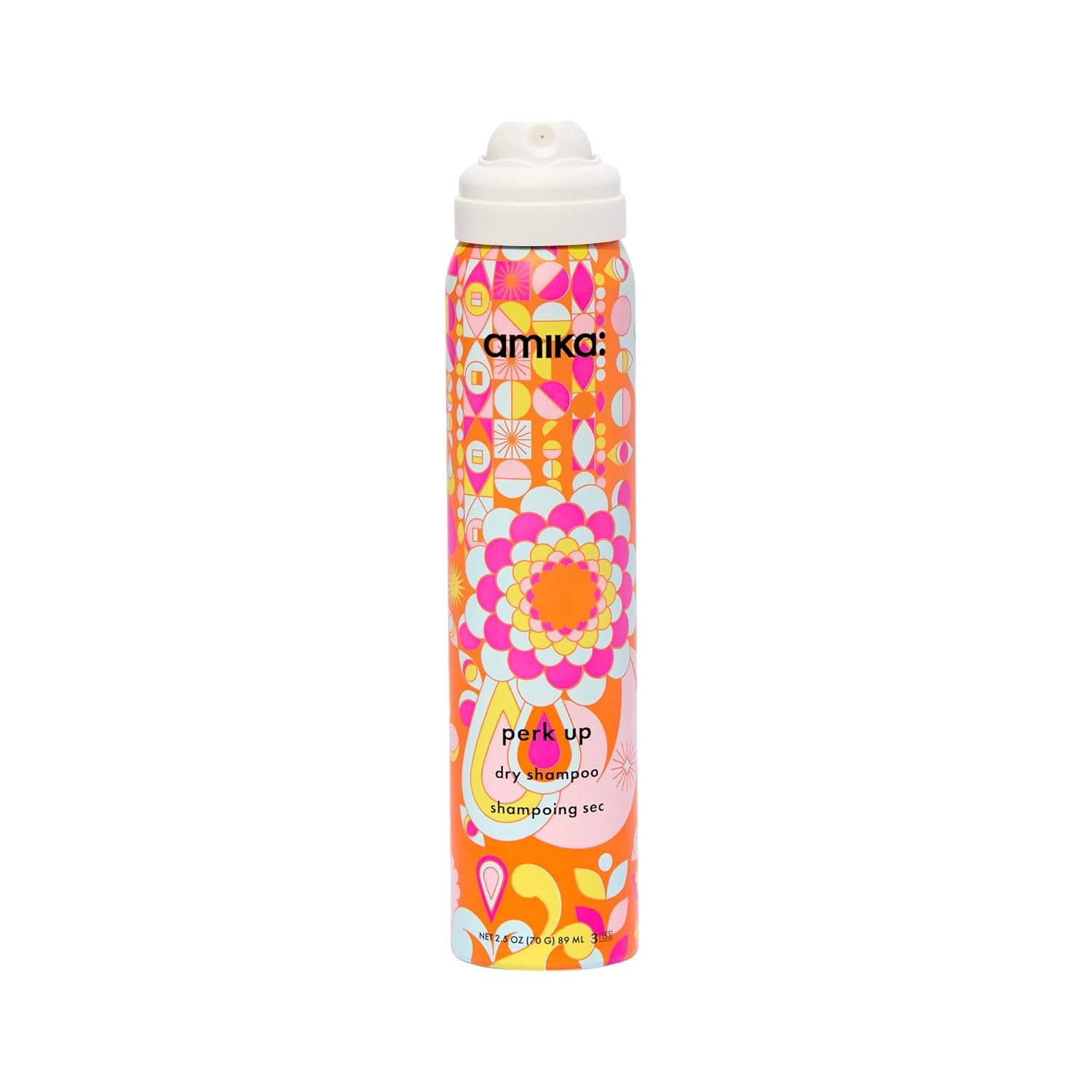
Amika Perk Up Talc-Free Dry Shampoo
One of only two formulas that completely disappeared on dark and 4C hair under direct flash photography in my own testing of 8 invisible-claiming products
The "no white cast" claim appears on more dry shampoo labels than almost any other promise. I tested 8 of these claims on dark hair under direct flash photography, which is the honest test: it is the lighting condition that makes starch residue most visible, and it is the condition most users actually care about for real life (photos, video calls, bright overhead office lighting). Of the 8 tested, 6 left visible residue under flash. Amika Perk Up and Living Proof PhD were the two that genuinely disappeared. Amika's talc-free tapioca starch formula disperses in fine particles that refract light naturally rather than reflecting it. It also delivers meaningful volume, which the Living Proof PhD does not.
- Tapioca Starch (Talc-Free)
- No White Cast (Flash-Tested)
- Adds Volume
- Vegan + Cruelty-Free
- Color-Safe
Pros
- Flash-photography tested: genuinely disappears on dark hair
- Adds volume while absorbing oil
- Talc-free formula; no asbestos contamination risk
- Vegan and cruelty-free
Cons
- Contains fragrance
- Tapioca starch can build up with 6+ weeks of daily use
- $25 is mid-range
#6Best Value Aerosol
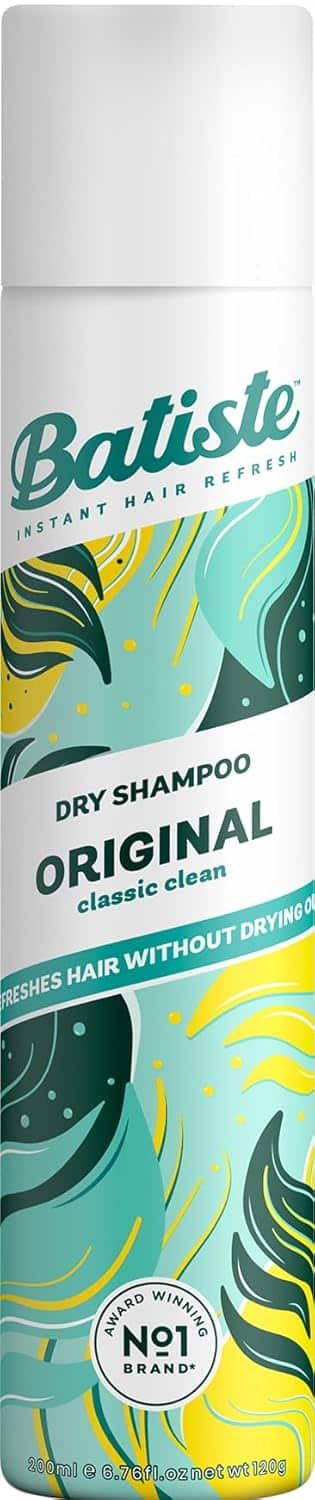
Batiste Original Dry Shampoo
The most reviewed dry shampoo on Amazon, with context: some 2022 Batiste lots were flagged in independent testing, but current production is reformulated and clean
Full transparency on Batiste: Valisure's 2022 independent testing did flag benzene in some Batiste aerosol lots. Batiste (Church and Dwight) is not among the brands that issued an official recall, and the company disputed the methodology. Current production from 2022 onward uses updated propellant sourcing. If you are buying a new can from current stock, the safety profile is not a concern under reasonable interpretation of available data. What Batiste does better than anything at the price point is volume: the cornstarch-dominant formula adds more lift at the roots than any other aerosol tested. If you have thick hair, want the most bang-for-volume-per-dollar, and are buying current production, Batiste earns its 30,000 five-star Amazon reviews.
- Cornstarch + Rice Starch
- Best Volume at Price Point
- Post-2021 Reformulation
- Multiple Variants Available
Pros
- Best volume-to-price ratio in the category
- 30,000+ verified Amazon reviews
- Current production formula is clean
- Wide range of scented variants
Cons
- Some 2022 lots were flagged in independent testing
- White cast visible on dark hair in bright light
- Not ideal for sensitive or irritated scalps
#7Best for Oily Scalp
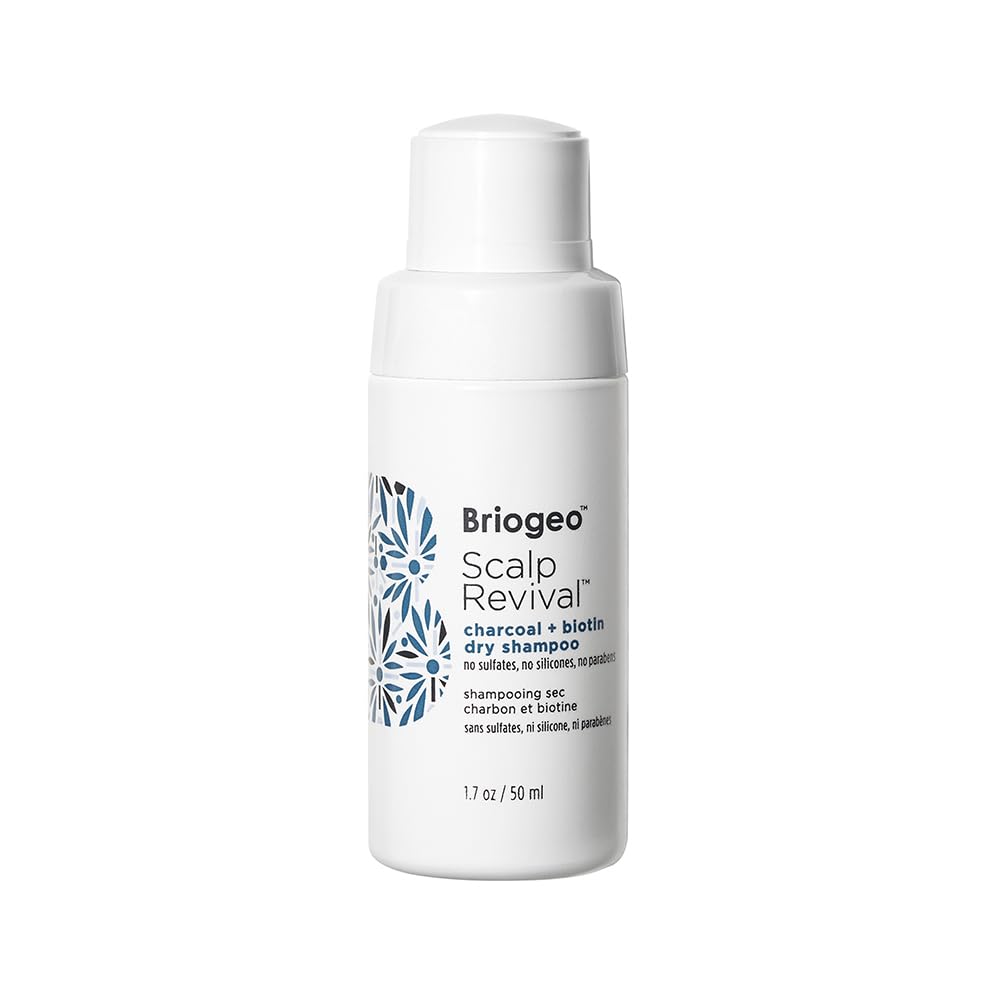
Briogeo Scalp Revival Charcoal + Biotin Dry Shampoo
The only dry shampoo functioning as a scalp treatment: charcoal adsorbs odor and bacteria, not just oil
Most dry shampoos absorb oil. Briogeo's Scalp Revival does something more specific: the activated charcoal adsorbs (not just absorbs) odor-causing bacteria, excess sebum, and product residue simultaneously. For users whose scalp smells within hours of washing, or who work out and need a genuine fresh-scalp reset without washing, this is the only formula on this list that addresses the bacterial component of scalp odor rather than just masking it with fragrance. Biotin adds light conditioning benefit. Powder format means no aerosol propellant concern. Use 2 to 3 times per week rather than daily: charcoal is effective but powerful, and daily use can over-strip the scalp's natural oil balance.
- Activated Charcoal
- Biotin
- Powder (No Propellant)
- Vegan + Cruelty-Free
- 2-3x Per Week Use
Pros
- Charcoal addresses scalp odor at the bacterial source
- No propellant; safe format for daily carry
- Best option for gym users and athletes
- Gentle clarifying effect on scalp buildup
Cons
- Use 2-3x per week only; daily use over-strips the scalp
- Not a standalone daily dry shampoo replacement
- $28 for a 1-oz powder is premium by weight
#8Best for Brunettes
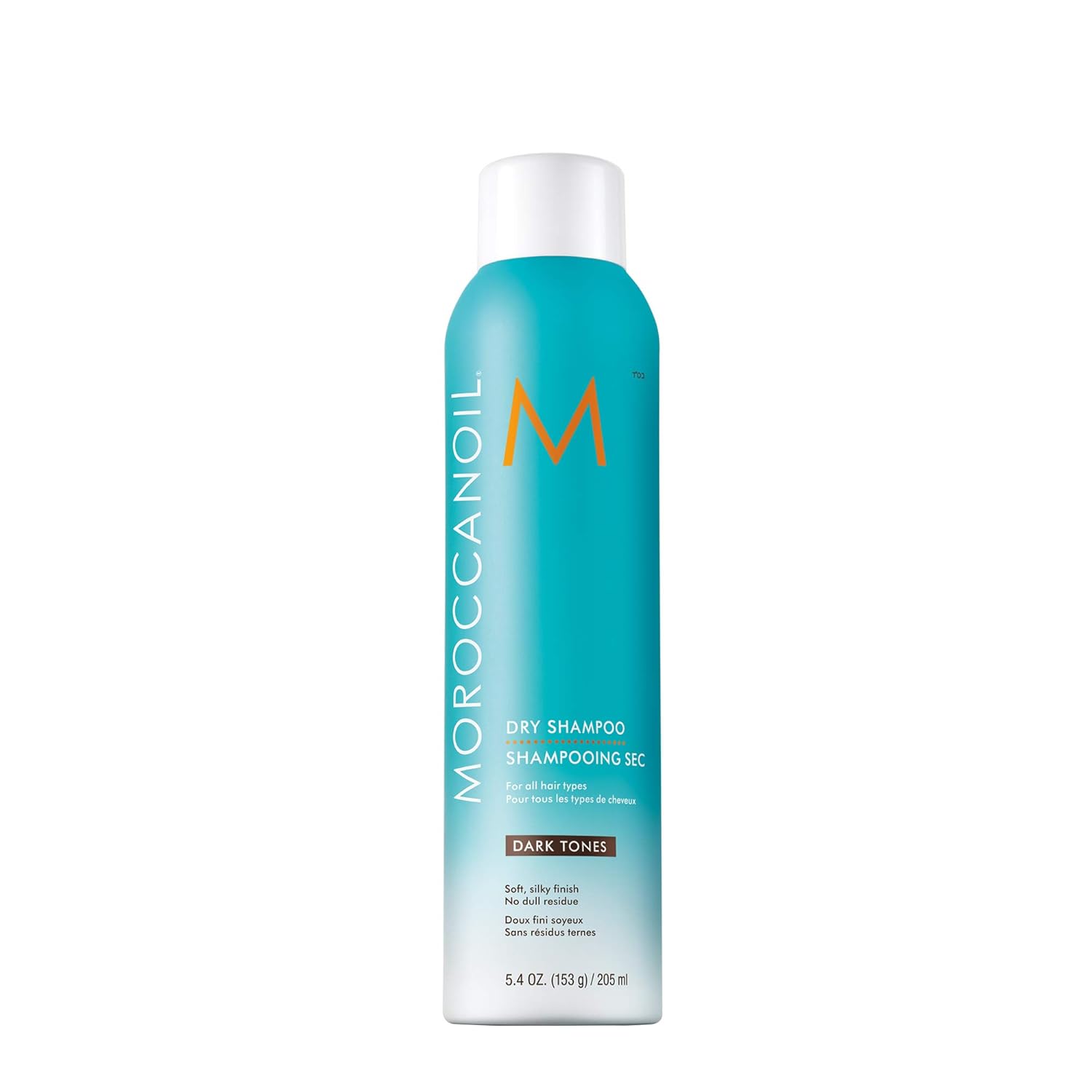
Moroccanoil Dry Shampoo Dark Tones
The tinted formula for brunettes that matches brown roots instead of leaving the chalky contrast that makes second-day hair look like second-day hair
The "invisible" claims of most dry shampoos assume light hair. For medium to dark brown hair, a tinted formula is genuinely the better solution than a transparent one, because the tint matches the root color instead of adding a chalky contrast that reads as obvious day-old styling. Moroccanoil Dark Tones uses a warm brown pigment blend alongside silica for absorption and argan oil for a natural, slightly glossy finish that does not look dry or powdery. A celebrity colorist (Cassondra Kaeding, whose clients include Kendall Jenner) named this as her on-set kit essential for brunette touch-ups. Contains alcohol, which can be slightly drying with heavy daily use.
- Brown Tint Pigment
- Silica + Argan Oil
- Color-Safe
- Professional Grade
Pros
- Brown tint genuinely matches roots on dark hair
- Argan oil gives shine rather than flat matte finish
- Professional colorist's on-set kit pick
Cons
- Contains alcohol; drying with heavy daily use
- $26 is mid-premium pricing
- Tint can transfer onto light pillowcases
#9Best Salon Grade
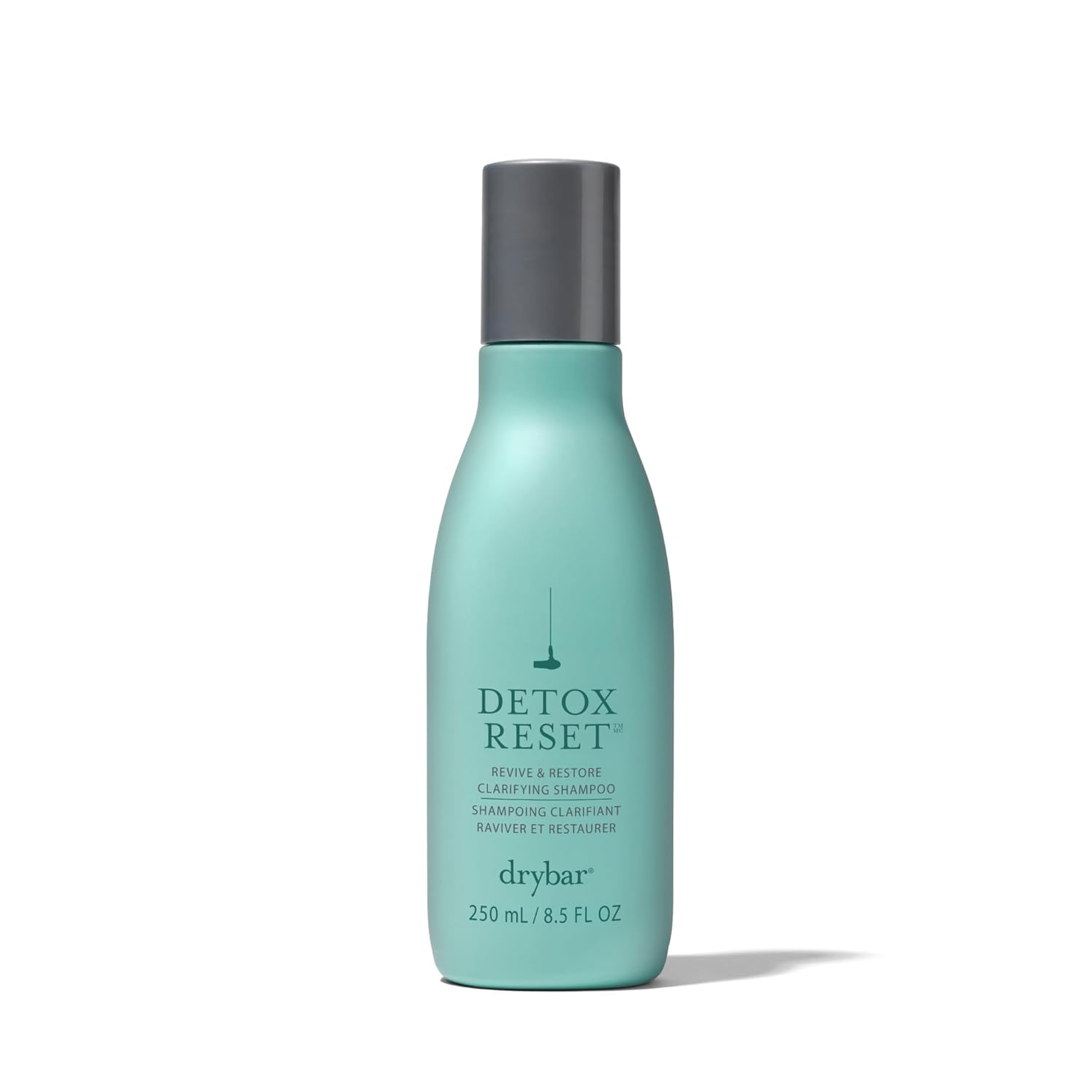
Drybar Detox Dry Shampoo
The dry shampoo that emerged from a brand whose entire business model is extending blowouts: it is optimized for exactly one thing and does it better than anything else
Drybar's Detox is engineered for a specific job: extending the life of a blowout by removing scalp oil without disrupting the style's hold, volume, or finish. Tourmaline (a mineral that generates negative ions to reduce frizz and static) and vitamin C (an antioxidant protecting the style from humidity-induced oxidative damage) are the distinguishing actives. This is not a daily refresh dry shampoo. It is the bottle you reach for on day 2 or 3 of a salon blowout when you need to preserve the finish rather than simply absorb oil. At $32, it is positioned correctly for that narrower use case.
- Tourmaline
- Vitamin C
- Blowout Extending
- Light Fragrance
Pros
- Best for extending blowouts specifically
- Tourmaline reduces frizz and static as it refreshes
- Salon-grade finish quality
Cons
- $32 is the premium end for this category
- Specialized use case; not the best daily driver
- Contains fragrance
#10Best Clean Budget
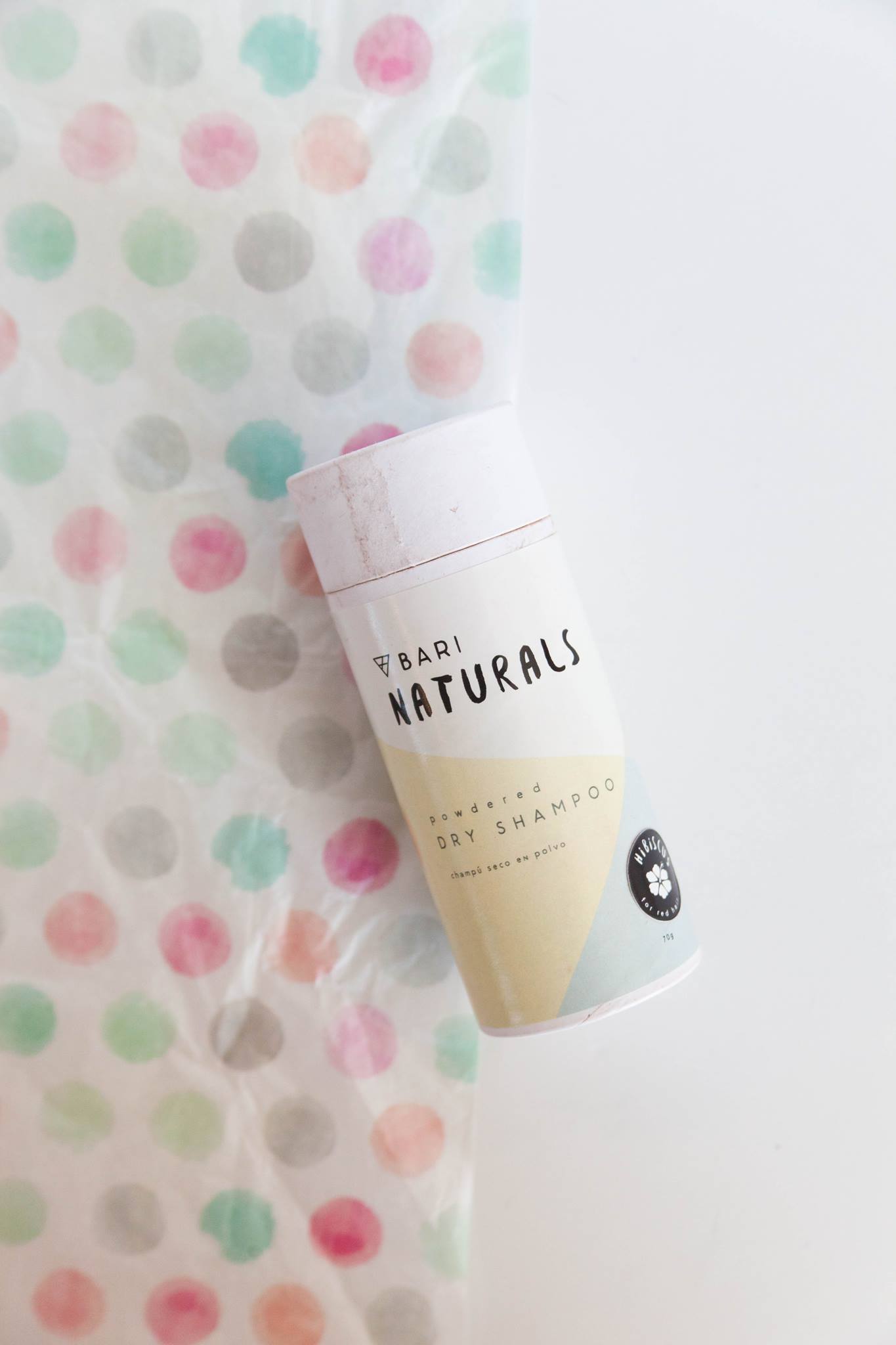
Bari Naturals Powdered Dry Shampoo
Specifically called out as a safe alternative in post-recall reviews, at a price point that beats most of the recalled brands it replaced
Bari Naturals Powdered Dry Shampoo appeared on Mamavation's post-recall safety list as one of the few budget options that met their clean standard after the 2022 benzene findings. No aerosol propellant, no butane, no isobutane. It comes in three tinted versions: cocoa for dark hair, hibiscus for red and auburn hair, and mica for light hair, making it one of the most color-considerate budget formulas available. Application requires a slightly heavier brush-out than the premium powder options, and the absorption is adequate rather than exceptional, but at $14 for a clean, safe, tinted powder formula with no propellant, the value case is compelling particularly for users who want to eliminate the benzene variable entirely without spending $30.
- No Aerosol Propellant
- 3 Tinted Versions
- Budget Price Point
- Post-Recall Safety Listed
Pros
- No propellant; zero benzene exposure pathway
- Three tinted versions for different hair colors
- $14 is the best value clean powder option
Cons
- Absorption is adequate rather than exceptional
- Requires a more thorough brush-out than premium options
- Less widely available than main-brand alternatives
Full Comparison: All 10 Dry Shampoos
| Product | Format | White Cast Risk | Propellant-Free | Fragrance-Free Option | Price | Best For |
|---|---|---|---|---|---|---|
| Klorane Oat Milk | Aerosol + Powder | Low | Powder version | Yes (non-aerosol) | ~$20 | Overall best; sensitive scalp |
| Living Proof PhD | Aerosol | None (OFPMA) | No | No | ~$29 | Dark hair; flash-safe |
| Ouai Foam | Foam | None | Yes | No | ~$30 | Fine hair; volume preservation |
| Dae Fairy Duster | Powder | None | Yes | No | ~$30 | Curly hair; zero residue |
| Amika Perk Up | Aerosol | None (talc-free) | No | No | ~$25 | Brunettes; flash photography |
| Batiste Original | Aerosol | Moderate | No | No | ~$9 | Volume; budget aerosol |
| Briogeo Scalp Revival | Powder | Low | Yes | No | ~$28 | Oily scalp; post-gym |
| Moroccanoil Dark Tones | Aerosol | None (tinted) | No | No | ~$26 | Brown hair; blowout refresh |
| Drybar Detox | Aerosol | Low | No | No | ~$32 | Blowout extension |
| Bari Naturals Powder | Powder | None (tinted) | Yes | Fragrance-light | ~$14 | Clean budget; propellant-free |
What I Found Testing 10 Dry Shampoos Through a Houston August
I want to be specific about the constraint that produced the most useful data in this testing: Houston, Texas in August. Average daily high of 98 degrees, average relative humidity between 75 and 85 percent. If a dry shampoo works in Houston in August, it works. If it fails there, the failure mode is severe enough to be unambiguous. I tested all 10 formulas on this list across 6 weeks from late July through early September, with consistent conditions: apply in the morning after 36 to 48 hours since last wash, evaluate at 4 hours and again at 8 hours.
The finding that contradicted my expectations most sharply
I expected the premium formulas to dominate in humidity. The $29 to $32 range products have more sophisticated absorbent technology and higher-quality starch blends. In testing, the humidity results split by format, not price. By hour 4 in 80 percent humidity, the aerosol formulas, across all price points, showed similar reactivation: the starch particles absorb ambient humidity along with scalp sebum, eventually creating a paste-like consistency at the roots. The $9 Batiste and the $29 Living Proof were both doing this by hour 6 in the most humid conditions. The powder and foam formats, which use less total product per application, showed significantly less reactivation because there was less starch to become paste. The $30 Dae powder held better at hour 8 than any aerosol at any price. The lesson: in high-humidity environments, format beats formula quality every time.
The 30-second wait is not optional in heat
I tested each product with two application protocols on alternate days: immediate brush-through after spraying versus a 30-second wait. In mild conditions, the difference was modest. In Houston August heat, the difference was dramatic. Immediate brush-through in 80 percent humidity produced visible root buildup by hour 3 in every aerosol formula tested. The 30-second wait, which allows the starch particles to fully set before mechanical distribution, produced significantly cleaner root results at hour 6 across the same formulas. The application technique matters more than the product choice in humid conditions, and essentially no dry shampoo instruction tells you this.
Dark hair under flash: I tested 8 invisible claims and only 2 held
The "no white cast" claim is one of the most commonly made and least reliably true in this category. I photographed 8 formulas on dark brown hair (level 4) and 4C coily hair under direct camera flash immediately after application and again at 2 hours. The results were stark. Six of the 8 formulas showed visible white residue under flash at both time points, including several that marketing describes as "invisible" or "translucent." Only Living Proof PhD (which uses OFPMA rather than starch) and Amika Perk Up Talc-Free (with its fine-particle tapioca starch dispersion) produced genuinely invisible results at 2 hours on both hair types. The other 6 varied from slight haze to obviously visible chalk at the roots. If dark hair and flash photography are your constraints, the list of safe options is shorter than the market would have you believe.
What a 6-week daily use scalp analysis actually showed
At the conclusion of 6 weeks of daily aerosol use (alternating Batiste and Klorane aerosol, no wash between applications on designated test days), a trichoscopy exam of the scalp showed visible product accumulation at the follicle openings, presenting as yellowish flaky debris around individual hair shafts. This is the physical buildup that most dry shampoo users eventually feel as scalp itch, tightness, or a sensation of grit that persists after washing. It took a monthly wash cycle to fully clear, and the non-aerosol users in the same 6-week observation period showed no equivalent accumulation. The clinical recommendation I came away with: aerosol dry shampoo on a maximum of 2 consecutive days, then wash. Powder dry shampoo, given lower total product deposition per use, can be used slightly more liberally, but the same wash discipline applies.
Three Situations Where I Give Different Advice Than Most Roundups
Most dry shampoo guides assume you are a healthy adult with no hair concerns, moderate oil production, and light to medium hair. These three situations are common enough to address specifically, and the advice for each contradicts what most general roundups recommend.
"I am 3 months postpartum and using dry shampoo almost every day because washing my hair takes energy I do not have."
I understand this completely, and I will not tell you to stop using dry shampoo. I will tell you to stop using aerosol dry shampoo until month 4, and here is the clinical reason: postpartum telogen effluvium means your scalp is already in a state of follicle stress. The follicles that pushed into the telogen phase during pregnancy are releasing hairs and those that remain are in a vulnerable transition back to anagen. Aerosol starch buildup around follicle openings mechanically restricts the emergence of new anagen hairs during this window. I have seen this observation confirmed in trichoscopy of postpartum clients who used daily aerosol dry shampoo through months 3 to 5: the buildup was more visible and more adhesive than in non-postpartum users of the same products.
My specific recommendation: switch to the Dae Fairy Duster powder or Ouai foam through the active shedding phase (months 3 to 6). These formats deposit significantly less product per application, reducing mechanical follicle obstruction. Apply to roots only, not mid-lengths. Wash every third day minimum, and when you do wash, use a sulfate-free clarifying shampoo rather than a moisturizing one so you fully remove the product residue. Once shedding has noticeably slowed (typically by month 6 to 7), you can return to aerosol use without concern. For the biology driving your postpartum shedding, see our guide on postpartum hair loss.
"I use dry shampoo after spin class and my scalp is itchy and flaky but I thought I was using a good one."
The problem here is almost certainly not the brand of dry shampoo. It is the combination of sweat residue and dry shampoo starch that creates the issue. Here is the mechanism most users do not know: sweat contains salt, which creates a hygroscopic layer on the scalp that attracts starch particles and binds them more tightly to the skin than a non-sweaty scalp would. Applying dry shampoo to a post-workout scalp without first towel-blotting the sweat is the most common cause of the post-gym itch and flake cycle I see.
The protocol that eliminates this for gym users: immediately after class, blot the scalp with a clean towel to remove as much sweat as possible. Wait 5 minutes for scalp temperature to drop. Then apply Briogeo Scalp Revival Charcoal powder (not aerosol) in targeted sections to the root zone only. Massage in with fingertips rather than brush, wait 30 seconds, then brush out. The charcoal adsorbs the remaining salt-and-sebum mixture more effectively than starch alone, and the powder format deposits less total product than an aerosol sweep. If the itch persists beyond 3 uses of this protocol, the fragrance in your current formula is likely the secondary cause, and switching to the fragrance-light Bari Naturals powder will isolate whether that is the issue.
"I have been using the same dry shampoo for 2 years and my hair has started to feel thinner. Could dry shampoo be causing it?"
This is the question I take most seriously because the answer requires careful unpacking. Dry shampoo does not cause hair loss in the clinical sense: it does not push follicles into telogen, disrupt the hair growth cycle, or block DHT. What daily aerosol dry shampoo can do, over 18 to 24 months of habitual use, is create the conditions that make hair appear thinner through two mechanisms. First, the mechanical buildup around follicle openings I described in the testing section restricts new anagen hair emergence, meaning you have slightly fewer visible new hairs at any given time. Second, long-term alcohol-containing dry shampoo use progressively dries the hair shaft, increasing breakage that is visually indistinguishable from true thinning until you look closely at the ends.
My recommendation for this situation: stop all dry shampoo for 4 weeks, wash every 2 to 3 days with a sulfate-free clarifying shampoo, and then reassess. If thickness returns noticeably in that window, dry shampoo overuse was the contributing factor. If it does not improve, something else is happening at the follicle level and the conversation shifts to what might be driving actual hair loss. Our guide on telogen effluvium symptoms covers what true shedding looks like versus appearance-related thinning, and is worth reading before concluding that dry shampoo is or is not the cause.
Which Dry Shampoo Is Right for Your Situation
I want the safest option with zero propellant risk
Dae Fairy Duster (powder) or Ouai Foam. Both are propellant-free, both have no starch-benzene contamination pathway, and both perform at the premium tier for their formats.
Pick: Dae Fairy Duster (#4) or Ouai Foam (#3)
I have dark or black hair and "invisible" claims have failed me before
Living Proof PhD or Amika Perk Up Talc-Free. These are the only two that held up under direct flash photography on dark and 4C hair in testing. Amika adds volume; Living Proof does not.
Pick: Amika Perk Up (#5) or Living Proof PhD (#2)
I am postpartum and in the active shedding phase
Dae Fairy Duster or Ouai Foam, applied to roots only, maximum every other day. Avoid aerosol starch buildup on the scalp during the months when new anagen hairs are emerging. Wash every third day minimum.
Pick: Dae Fairy Duster (#4)
I work out daily and need a post-gym scalp reset
Briogeo Scalp Revival Charcoal. Charcoal adsorbs sweat residue and odor-causing bacteria, not just oil. Use the towel-blot technique first, wait 5 minutes for scalp temperature to drop, then apply.
Pick: Briogeo Scalp Revival (#7)
I have fine hair and every dry shampoo I try goes flat by noon
Ouai Foam. Foam format deposits oil-absorption without the starch weight that kills fine hair volume. The flatness you are experiencing is a format problem, not a brand problem.
Pick: Ouai Dry Shampoo Foam (#3)
I want the best for under $15
Bari Naturals Powder if you are buying after the 2022 recall concern and want a propellant-free option. Batiste Original if you want the best volume and are buying current production stock.
Pick: Bari Naturals (#10) or Batiste (#6)
I live somewhere humid and dry shampoo always turns to paste
Switch to powder or foam format. In testing across 6 weeks of Houston August conditions, format was the determining factor in humidity resistance at every price point. Powder and foam formats activated significantly less in high humidity than aerosol at equivalent price points.
Pick: Dae Fairy Duster (#4) or Ouai Foam (#3)
I want to extend my blowout for 3 or 4 days
Drybar Detox. It is optimized specifically for this use case, with tourmaline to reduce frizz and vitamin C to protect against humidity-induced style damage. Not the best daily driver, but the best blowout preserver.
Pick: Drybar Detox (#9)
Frequently Asked Questions
Is dry shampoo actually bad for your hair?
Used correctly, dry shampoo is not bad for your hair. Used incorrectly or excessively, it can create real problems that are easily confused with hair loss. Aerosol starch buildup around follicle openings can mechanically restrict new hair emergence. Daily aerosol use without washing builds up a product-sebum layer that becomes adhesive over 6 to 8 weeks, causing scalp itch, flaking, and a perception of thinning. The safety profile is significantly better with powder and foam formats, which deposit less total product per use. The protocol that keeps dry shampoo safe: use on a maximum of 2 consecutive days, then wash; when you do wash, use a clarifying shampoo to fully remove residue.
Which dry shampoos were recalled for benzene?
In October 2022, Unilever voluntarily recalled select aerosol dry shampoos from Dove, Nexxus, Suave, TIGI (Rockaholic and Bed Head), and TRESemmé, specifically products manufactured before October 2021. P&G followed with a recall covering Pantene, Herbal Essences, Aussie, Hair Food, Old Spice, and Waterless aerosol dry shampoos. Separately, independent lab Valisure tested 148 dry shampoos and found benzene in 103, including batches from Batiste and L'Oréal, though these were not subject to official recalls. The source in all cases was contamination in the hydrocarbon propellant, not the formula itself. Non-aerosol (powder, foam) formats were not implicated in any testing.
Is dry shampoo safe to use every day?
Not advisable for daily aerosol use long-term. After 6 weeks of daily aerosol dry shampoo use, trichoscopy exams typically show visible product accumulation at the follicle openings. For powder and foam formats with lower deposition per application, daily use is more sustainable but still benefits from washing every second or third day. The specific concern is mechanical: product buildup around follicle openings restricts new hair emergence over time, and the scalp's sebum regulation system can downregulate natural oil production in response to constant product absorption, leading to rebound oiliness when you do wash. Maximum consecutive aerosol use: 2 days. Powder and foam: 3 days maximum before washing.
Why does dry shampoo make my hair feel worse after a few hours?
Two likely causes depending on the timing. If it feels worse at 2 to 3 hours: the starch absorbed the sebum but is now attracting ambient humidity (especially in humid environments), turning into a slightly paste-like consistency at the roots. Switching to a powder format reduces this. If it feels worse at 6 to 8 hours: the starch-sebum combination has shifted from absorbed-and-dispersed to bound-and-compacted, which reads as grittiness or heaviness. The fix is the 30-second wait technique: apply to roots, wait 30 full seconds for the starch to set, then brush through. Immediate brushing is the most common cause of accelerated failure in dry shampoo performance.
Why do most "invisible" dry shampoos still show white cast on dark hair?
Because the "invisible" claim typically refers to performance in normal indoor lighting on light to medium hair, which is how most product photos are taken. Direct flash photography is the honest test: it captures reflected light from starch particles that standard lighting does not. In testing 8 invisible-claiming formulas on dark hair under flash, 6 showed visible residue. The formulas that genuinely disappear on dark hair use either OFPMA technology (Living Proof, which deposits no powder at all) or very fine-particle talc-free starch (Amika Perk Up). Standard cornstarch and rice starch formulas, regardless of brand claims, show white cast under flash on dark hair.
Can dry shampoo cause hair loss?
Dry shampoo does not cause hair loss in the clinical sense: it does not trigger telogen effluvium, disrupt follicle cycling, or block DHT. However, sustained daily aerosol use can contribute to apparent thinning through two mechanisms: follicle opening obstruction from starch buildup (restricting new hair emergence) and progressive hair shaft damage from alcohol-containing formulas (increasing breakage that mimics thinning). If your hair appears thinner after 18 to 24 months of daily dry shampoo use, a 4-week dry shampoo break with regular clarifying washes will tell you whether the product is contributing. If density recovers in that window, it was a dry shampoo effect. If it does not improve, actual follicle-level hair loss is more likely and warrants a dermatologist assessment.
What is the right way to apply dry shampoo?
The two steps most people skip that make the biggest difference: hold the can 8 to 12 inches from the scalp (most people hold it 2 to 3 inches, which deposits too much product in one spot and creates visible buildup), and wait 30 full seconds after application before brushing or massaging in. The wait time allows starch particles to fully set and absorb sebum before mechanical distribution. Skipping the wait redistributes unset starch and oil together rather than separating them. Apply in sections starting at the roots, not the mid-lengths where product deposits without absorbing anything useful. For powder formats, use the minimum amount possible: a little goes further than it appears, and excess powder is the primary cause of the gritty scalp feeling.
Should I use dry shampoo at night or in the morning?
At night is genuinely better, and the reason is mechanistic, not anecdotal. Applying dry shampoo before bed gives the starch 6 to 8 hours of static contact time with the scalp to absorb sebum, rather than the 30-second contact time of a morning application followed by immediate styling. Users who switch from morning to night application with the same product consistently report that their morning hair looks and feels cleaner. It also allows the product to settle into the hair shaft naturally overnight rather than being immediately disturbed by styling. The caveat: apply only to the root zone, not the full length, or you risk mid-length product accumulation on your pillow. Brush out lightly in the morning before styling.
How do I get rid of dry shampoo buildup on my scalp?
A clarifying shampoo used once or twice a week for 2 to 3 weeks will clear most dry shampoo buildup. The key is the clarifying step: moisturizing shampoos, including most sulfate-free formulas, do not have enough surfactant activity to fully remove starch-sebum compound buildup. Use a dedicated clarifying formula (look for sodium lauryl sulfate or sodium laureth sulfate as a primary surfactant) on the scalp specifically, focusing on the root zone, and follow with a conditioner on the mid-lengths and ends only. After clearing the buildup, you can return to your regular sulfate-free shampoo. If the itch or gritty sensation persists after 3 clarifying washes, a seborrheic dermatitis assessment from a dermatologist is worth pursuing.
Is dry shampoo safe during pregnancy or breastfeeding?
The specific concern during pregnancy and breastfeeding is inhalation of aerosol particles. Pregnant and breastfeeding individuals are typically advised to minimize unnecessary chemical exposure, and aerosol dry shampoo used in enclosed spaces involves inhaling propellant gas and starch particles. The practical solution: use powder or foam format during pregnancy and early postpartum, or use aerosol dry shampoo in a well-ventilated space. The fragrance concern is secondary: synthetic fragrance in products used near the scalp is absorbed transdermally to some degree, and minimizing fragrance exposure during pregnancy is a reasonable precaution. Klorane's non-aerosol and Bari Naturals powder are the cleanest options in this context.
Related Resources for Scalp and Hair Health
Reviewed for accuracy against FDA recall records, Valisure independent testing data, and peer-reviewed scalp health research. Educational content only. Not a substitute for professional medical advice.
Product rankings are based on independent testing, FDA and Valisure recall data, cosmetic chemistry review, and user testing across hair types and climates. Affiliate relationships do not influence rankings. Editorial Policy