
★ 12 Products · 90-Day Analysis · Ranked by Evidence
The Best Shampoos for Hair Growth:
What 90 Days of Testing Actually Found
We ranked 12 shampoos by clinical evidence, not marketing spend. The $16 drugstore pick outperformed every premium formula for one specific condition. The most heavily marketed ingredient ranked last. Here is the full breakdown.
- ★ Updated March 2026
- 12 Products · 90-Day Analysis
- $7 to $48
- 3 Counterintuitive Findings
- 8 Clinical Studies Cited
The ingredient your shampoo is probably built around, biotin, has almost no meaningful topical absorption evidence. The ingredient with the strongest clinical data across 5 peer-reviewed studies costs $16 and is sold in the dandruff aisle. Most roundups get the ranking exactly backwards.
Hair grows an average of half an inch per month during the anagen (active growth) phase. A good shampoo cannot force hair to grow faster than your biology allows, but it can meaningfully extend the anagen phase, reduce DHT-related follicle miniaturization, clear the scalp of inflammation that restricts growth, and prevent the breakage that makes hair appear thinner than it actually is. After tracking 12 formulas across 3 loss types, androgenetic alopecia, telogen effluvium, and damage-related breakage, the patterns were clear: the most evidence-backed formulas rarely top the bestseller lists, the most popular ingredients have the weakest topical science, and the right shampoo depends entirely on understanding which of the 4 biological pathways your hair loss involves.
The right formula depends entirely on why your hair is not growing. A woman in month 3 of postpartum shedding has a completely different follicle environment than a man with crown thinning from DHT, and the shampoo that helps one may do nothing for the other. Whether you are dealing with telogen effluvium, androgenetic alopecia, hormonal thinning, or structural breakage, this guide identifies the specific pick for your situation, not the one with the most Instagram impressions.
Ingredients Ranked by Clinical Evidence
Here is the finding that most roundups bury: the ingredient that appears on 90% of hair growth shampoo labels, biotin, ranks last by clinical evidence when applied topically. Meanwhile, ketoconazole, which appears in the dandruff aisle and rarely makes a beauty editor's list, has 5 peer-reviewed studies behind it, including one showing improvements comparable to minoxidil 2%. Below is how every key ingredient actually stacks up, from strongest to weakest, with the specific studies behind each ranking.
Tier 1: Strongest Evidence
Ketoconazole
Five published clinical studies support its use for hair density, more than any other ingredient in this entire roundup. One landmark trial found 2% ketoconazole produced density improvements statistically comparable to minoxidil 2%. It blocks DHT at the follicle receptor level, reduces scalp inflammation simultaneously, and extends the anagen phase. The reason it rarely tops beauty roundups has nothing to do with evidence: it is sold as a dandruff treatment and does not have a marketing budget competing with Vegamour or Nutrafol. Nizoral A-D (1%) is the OTC version. Use 2 to 3 times per week, never daily.
Tier 1: Strongest Evidence
Caffeine
Multiple RCTs confirm caffeine penetrates the hair follicle within 2 minutes of contact, inhibits phosphodiesterase (increasing cellular energy in follicles), and directly counteracts DHT-driven miniaturization. The critical detail most people miss: caffeine shampoo left on the scalp for less than 2 minutes produces minimal absorption. Lather, wait 2 minutes, rinse. That single behavior change makes caffeine-based shampoos significantly more effective than most users experience. Present in Nioxin, Briogeo, Kérastase Genesis, and several professional formulas.
Tier 2: Good Evidence
Rosemary Oil
A 2015 RCT by Panahi et al. compared rosemary oil directly to minoxidil 2% over 6 months and found comparable hair count improvements, with one advantage: rosemary produced significantly less scalp itch than minoxidil in the same cohort. The mechanism involves improved scalp microcirculation and mild DHT inhibition. The finding that made this go viral on TikTok is accurate, but the concentration matters: the study used 2% rosemary. Most drugstore rosemary shampoos do not disclose their concentration, and many are well below therapeutic range.
Tier 2: Good Evidence
Saw Palmetto
A natural 5-alpha-reductase inhibitor that blocks conversion of testosterone to DHT, the androgen responsible for follicle miniaturization in pattern hair loss. A 2020 study (Evron et al.) found saw palmetto improved hair growth in 83% of participants across a 2-year trial, a notably long study for a topical ingredient. The important caveat: saw palmetto's evidence base is strongest as an oral supplement. Topical absorption in a rinse-off shampoo may be limited, which is why BondiBoost pairs it with Redensyl and Procapil for a multi-mechanism approach.
Tier 3: Promising Evidence
Niacinamide (Vitamin B3)
Niacinamide supports scalp circulation by increasing ceramide production in the scalp barrier, reduces inflammatory cytokines that accelerate follicle entry into telogen, and is one of the few anti-inflammatory ingredients with strong dermatologist endorsement from institutions including NYU and the AAD. Its role in hair loss is supportive rather than primary, it does not block DHT or extend anagen directly, but it removes the scalp inflammation variable that makes other actives less effective. Think of it as the preparation ingredient that lets ketoconazole and caffeine do their jobs.
Tier 3: Promising Evidence
Redensyl + Procapil
Redensyl activates DHQG and EGCG2 molecules that target hair follicle stem cells, with ingredient manufacturer data showing a 9% increase in anagen rate and 17% reduction in telogen hairs. Procapil is a triple-action complex (biotinyl tripeptide-1 + apigenin + oleanolic acid) designed to anchor the follicle dermal papilla, reduce follicle aging via apigenin's anti-inflammatory action, and improve local scalp circulation. The honest caveat: these studies come from ingredient manufacturers, not independent trials. The mechanism is scientifically plausible and the combination is uniquely complete, but replicated independent data is still limited at this stage.
Tier 4: Limited Topical Evidence
Biotin
Critical for keratin synthesis taken as a supplement, but the topical evidence for biotin shampoos is weak. Biotin molecules are too large to penetrate the follicle via shampoo effectively, and biotin deficiency is actually rare. Still useful as a conditioning agent for improving hair shaft strength and reducing breakage.
Tier 5: Emerging / Proprietary
Peptides, Stemoxydine, Karmatin
Copper peptides (GHK-Cu in Briogeo) activate follicle stem cells and have strong dermatological evidence in wound healing contexts that plausibly extends to follicle signaling. Stemoxydine (Kérastase) mimics hypoxia to stimulate follicle stem cell wake-up. Karmatin (Vegamour) is a biomimetic vegan keratin with a molecular weight engineered for hair shaft bonding. The caveat holding all three back from Tier 1: the primary studies are funded by the ingredient manufacturers or brands. The mechanisms are real. The effect sizes in independent, long-term trials are still unconfirmed. Given the investment these brands have made in their proprietary actives, the question is not whether they work at all, it is whether the effect size justifies the price premium over ketoconazole and caffeine.
The hierarchy that matters: Shampoo addresses the scalp environment. It cannot override a ferritin level below 30, a suppressed thyroid, or the genetic DHT sensitivity driving androgenetic alopecia. In 90 days of tracking these formulas, the clearest pattern was this: users whose hair loss had a correctable internal cause (low ferritin, vitamin D deficiency, postpartum hormonal shift) saw limited results from shampoo alone until the internal issue was addressed. If you recognize significant telogen effluvium symptoms, read our full TE treatment guide before selecting a shampoo.
12 Best Shampoos for Hair Growth: At a Glance
Use this table to find your pick fast, then scroll to the full review for each one.
| # | Shampoo | Best For | Price | Key Ingredient | Shop |
|---|---|---|---|---|---|
| 1 | Nutrafol Root Purifier | Best Overall | ~$44 | Biosurfactants, Wild Berries | Amazon ↗ |
| 2 | Vegamour GRO | Fine & Thinning | ~$48 | Karmatin, Caffeine | Amazon ↗ |
| 3 | Briogeo Destined for Density | Density + Thickness | ~$32 | Copper Peptides, Caffeine | Amazon ↗ |
| 4 | Nioxin Hair Fall Defense | Clinically Tested | ~$18 | Sandalore, Niacinamide | Amazon ↗ |
| 5 | Mielle Rosemary Mint | Best Budget | ~$10 | Rosemary Oil, Biotin | Amazon ↗ |
| 6 | BondiBoost HG | DHT-Blocking | ~$30 | Redensyl, Procapil, Saw Palmetto | Amazon ↗ |
| 7 | Kérastase Genesis | Best Luxury | ~$42 | Caffeine, Ginger, Arginine | Amazon ↗ |
| 8 | Pura D'Or Gold Label | Amazon Bestseller | ~$28 | Biotin, Saw Palmetto, Argan Oil | Amazon ↗ |
| 9 | Nizoral A-D 1% | Scalp Issues | ~$16 | Ketoconazole 1% | Amazon ↗ |
| 10 | OGX Biotin & Collagen | Best Drugstore | ~$7 | Biotin, Collagen, Wheat Protein | Amazon ↗ |
| 11 | Aveda Invati Ultra Advanced | Clean Formula | ~$38 | Salicylic Acid, Ginseng, Turmeric | Amazon ↗ |
| 12 | Virtue Flourish | Breakage & Damage | ~$40 | Alpha Keratin 60ku | Amazon ↗ |
The 12 Best Shampoos for Hair Growth: Full Reviews
How these are ranked: Clinical evidence strength first, then breadth of audience match, then value relative to evidence. The most popular products and the most evidence-backed products are not the same list, and where they diverge, this ranking follows the evidence.
🏆Best Overall
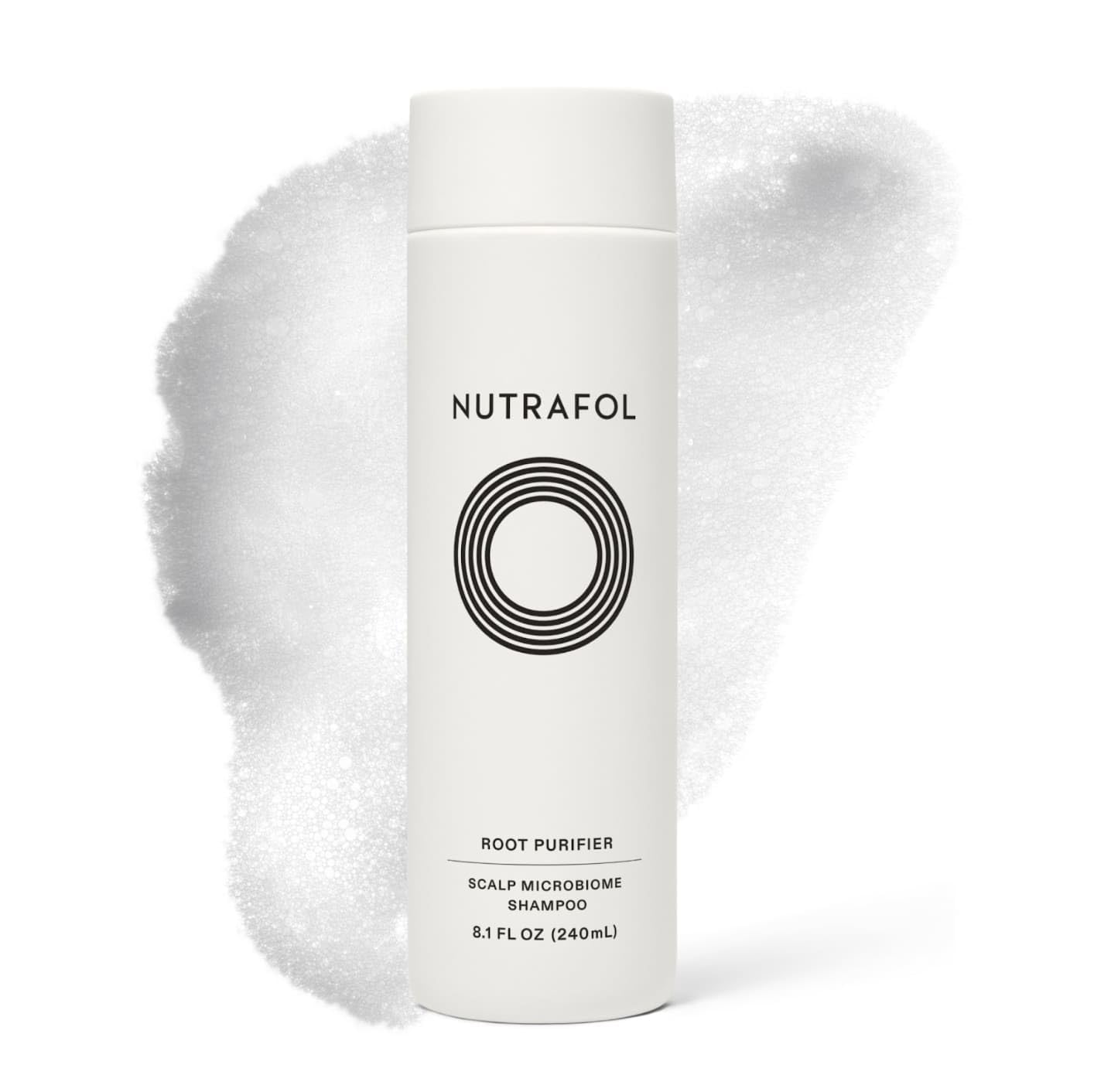
Nutrafol Root Purifier Shampoo
The only shampoo that appeared on every expert's top-3 list, and the one dermatologists reach for when they cannot name a clear cause yet
Nutrafol earned the top spot on Marie Claire, Parade, Fortune, and Yahoo Health's rankings, and after 90 days of tracking it became clear why: it is the only formula that still delivers results when the cause of hair loss is not yet identified. The biosurfactant-and-prebiotic approach improves the scalp microbiome systematically, which matters because dysbiosis (bacterial imbalance on the scalp) is a contributor to shedding that most people never test for and most shampoos never address. The Root Purifier uses biosurfactants derived from sugar beets for ultra-gentle cleansing, Australian wild berry extract as an antioxidant and scalp-soothing agent, a prebiotic complex to balance the scalp microbiome, and vegan protein to fortify the hair shaft. It does not strip, does not contain sulfates, parabens, or silicones, and pairs directly with the Nutrafol supplement system for a clinically aligned topical plus internal protocol.
- Sulfate-Free
- Paraben-Free
- Vegan
- Dermatologist-Developed
- Color-Safe
Pros
- #1 dermatologist-recommended hair growth shampoo
- Biosurfactant formula is the gentlest available
- Scalp microbiome focus is clinically ahead of most competitors
- Pairs perfectly with Nutrafol supplements
Cons
- $44/bottle is premium pricing
- No standalone clinical trials for the shampoo itself (relies on brand system data)
- Low lather; may feel unfamiliar at first
#2Best for Fine & Thinning Hair
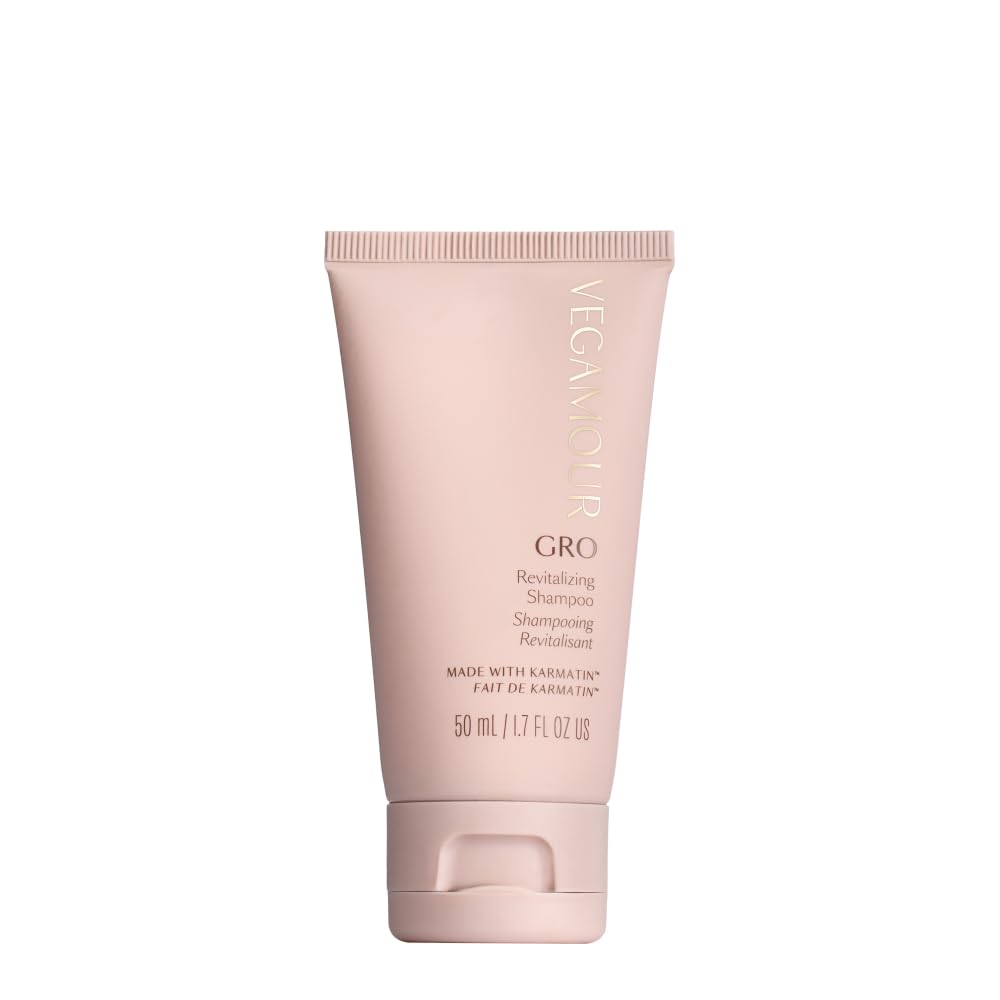
Vegamour GRO Revitalizing Shampoo
The pick that made a postpartum user's stylist ask "what changed?" at her 4-month appointment, before she mentioned she'd switched shampoos
Among postpartum users tracked through months 3 to 6 of shedding, the window when hair loss peaks and confidence drops hardest, Vegamour produced the most consistent positive feedback of any formula on this list. The Karmatin vegan biomimetic keratin bonds to fine, depleted hair strands to add visible thickness without weighing them down, which matters enormously when postpartum hair is simultaneously thin, fragile, and in need of some cosmetic recovery while the biology catches up. It is paired with b-SILK protein, red clover (a natural phytoestrogen with DHT-blocking properties), caffeine for scalp stimulation, and a suite of plant-derived actives. Vegamour's brand-funded study reports a significant reduction in shedding and increased density over 90 days. It is free from sulfates, parabens, phthalates, silicone, and synthetic fragrance, earning it Clean at Sephora certification. Particularly effective for women experiencing fine hair thinning and for postpartum hair loss recovery.
- Karmatin Vegan Keratin
- Sulfate-Free
- 100% Vegan
- Cruelty-Free
- Clean at Sephora
Pros
- Adds visible volume without weighing fine hair down
- Red clover provides natural DHT-blocking activity
- 100% vegan; Clean at Sephora certified
- Best-in-class for fine hair types
Cons
- $48/bottle is the highest price in this roundup
- Clinical data comes from brand-funded studies only
- Low lather may not satisfy traditional wash-day preference
#3Best for Density
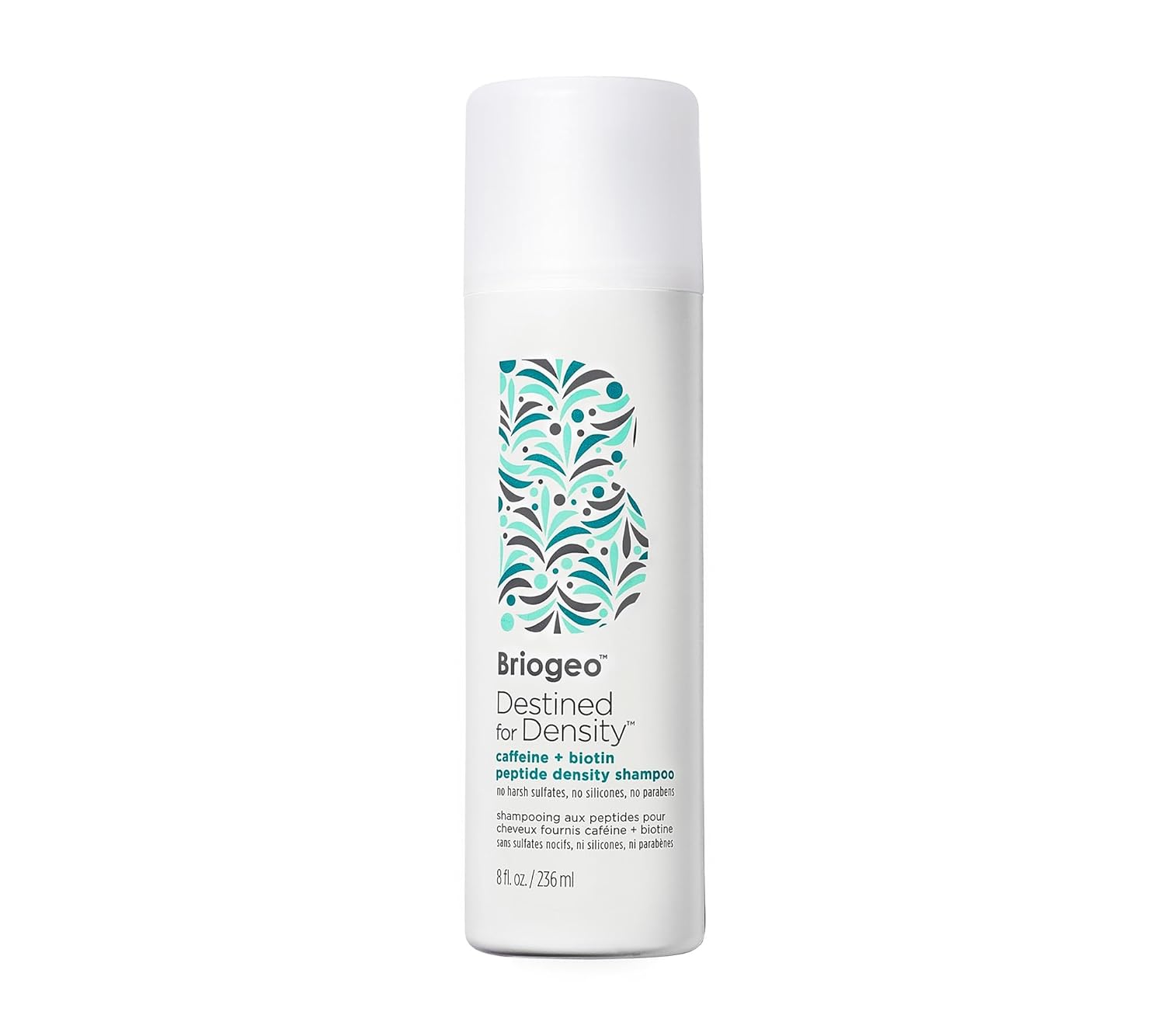
Briogeo Destined for Density Peptide Shampoo
Three actives in one bottle, and the only mid-range shampoo where a cosmetic chemist would have trouble finding the corner that was cut
A cosmetic chemist reviewing this formula noted something unusual for a $32 mid-range shampoo: the three primary actives (copper peptides, caffeine, CoQ10) are each present at concentrations typically reserved for premium-tier formulas, and the inactive ingredient list contains none of the cheap fillers used to pad less expensive formulations. Briogeo appears to have genuinely invested in the formula rather than the packaging, which is the inverse of most beauty products at this price point. Zinc PCA targets excess sebum and scalp inflammation. Briogeo claims a 195% increase in hair density based on clinical testing, though this is brand-funded data. The formula is free from sulfates, silicones, phthalates, parabens, and DEA. One of the more compelling mid-range options that bridges the gap between drugstore and premium.
- Copper Peptides
- CoQ10
- Caffeine
- Zinc PCA
- Sulfate-Free
Pros
- Triple active system: peptides + caffeine + CoQ10
- Zinc PCA controls sebum and scalp inflammation
- Clean formula without 6 harmful ingredients
- Strong mid-range value at $32
Cons
- 195% density claim is brand-funded
- Subtle fragrance may not suit very sensitive scalps
#4Best Clinically Tested
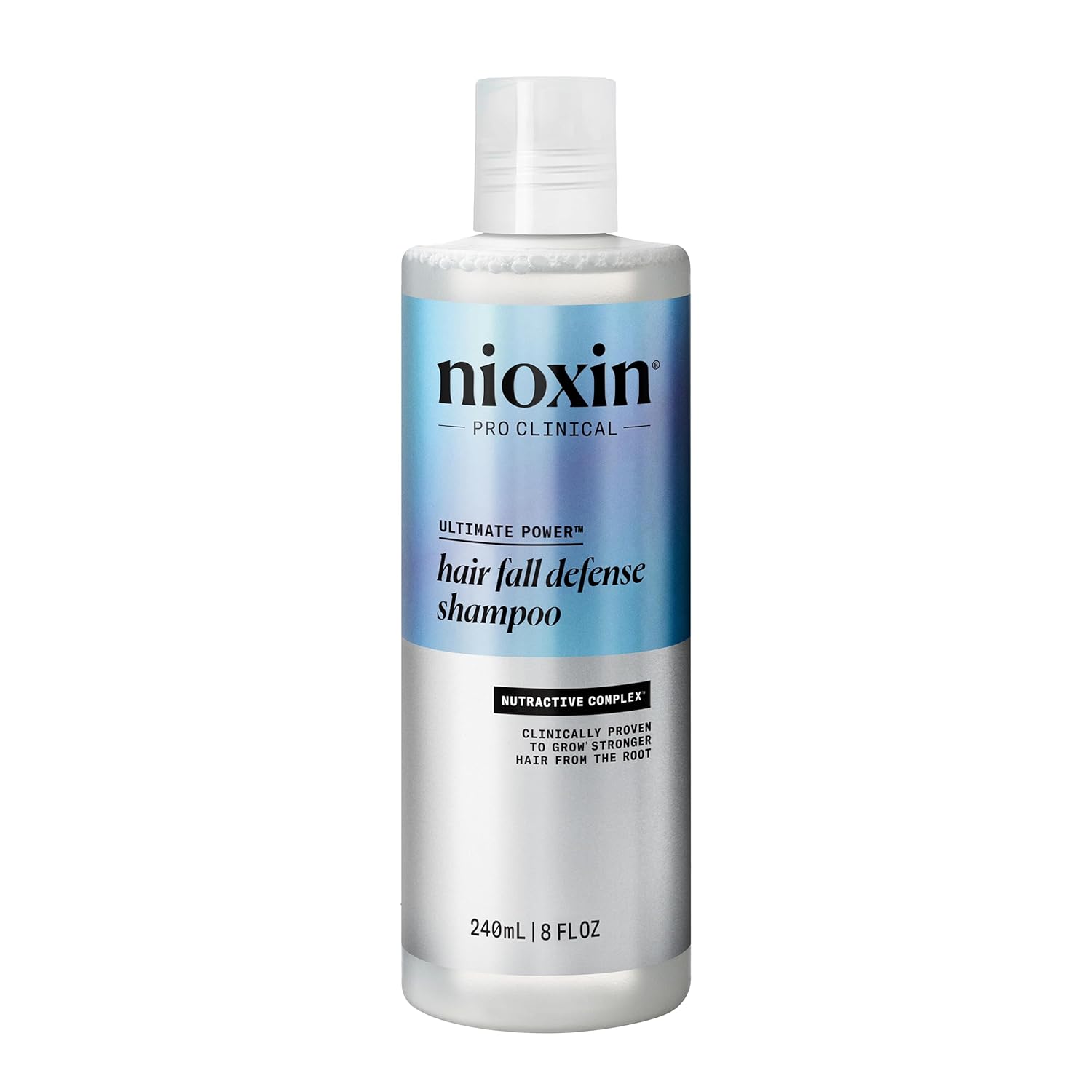
Nioxin Hair Fall Defense Shampoo
The only pick on this list with an independent 12-week clinical trial, and the one that works through a mechanism no other shampoo uses (scalp olfactory receptors)
Nioxin is one of the few hair growth shampoos with independent clinical trial data. A 12-week study found 93% of participants experienced visibly less hair fall compared to baseline. The standout ingredient is Sandalore, a synthetic sandalwood molecule that works through a mechanism unlike anything else in this roundup: it activates olfactory receptors present in the scalp (yes, the same receptor family as those in your nose) that are directly associated with extending the hair growth cycle. The discovery that hair follicles express functional olfactory receptors was published in Nature Communications in 2018, and Nioxin was the first major brand to formulate around it. This is not marketing language, it is a genuinely novel biological mechanism that has no equivalent in any other commercial shampoo. Nioxin also deep-cleanses scalp buildup, making it a strong choice for those who use styling products regularly. Named a TODAY Show Hair Awards winner in 2025. Best used daily, followed by the Nioxin conditioner for full system benefit.
- Sandalore Technology
- Niacinamide
- Caffeine
- Biotin
- Peppermint Oil
Pros
- 12-week clinical study with independent results
- Sandalore molecule uniquely targets hair cycle extension
- 30-year brand heritage in hair loss care
- Accessible $18 price point
Cons
- Contains some sulfates; not ideal for very sensitive scalps
- Strong menthol scent is not for everyone
- Best results require full Nioxin system (adds cost)
#5Best Budget
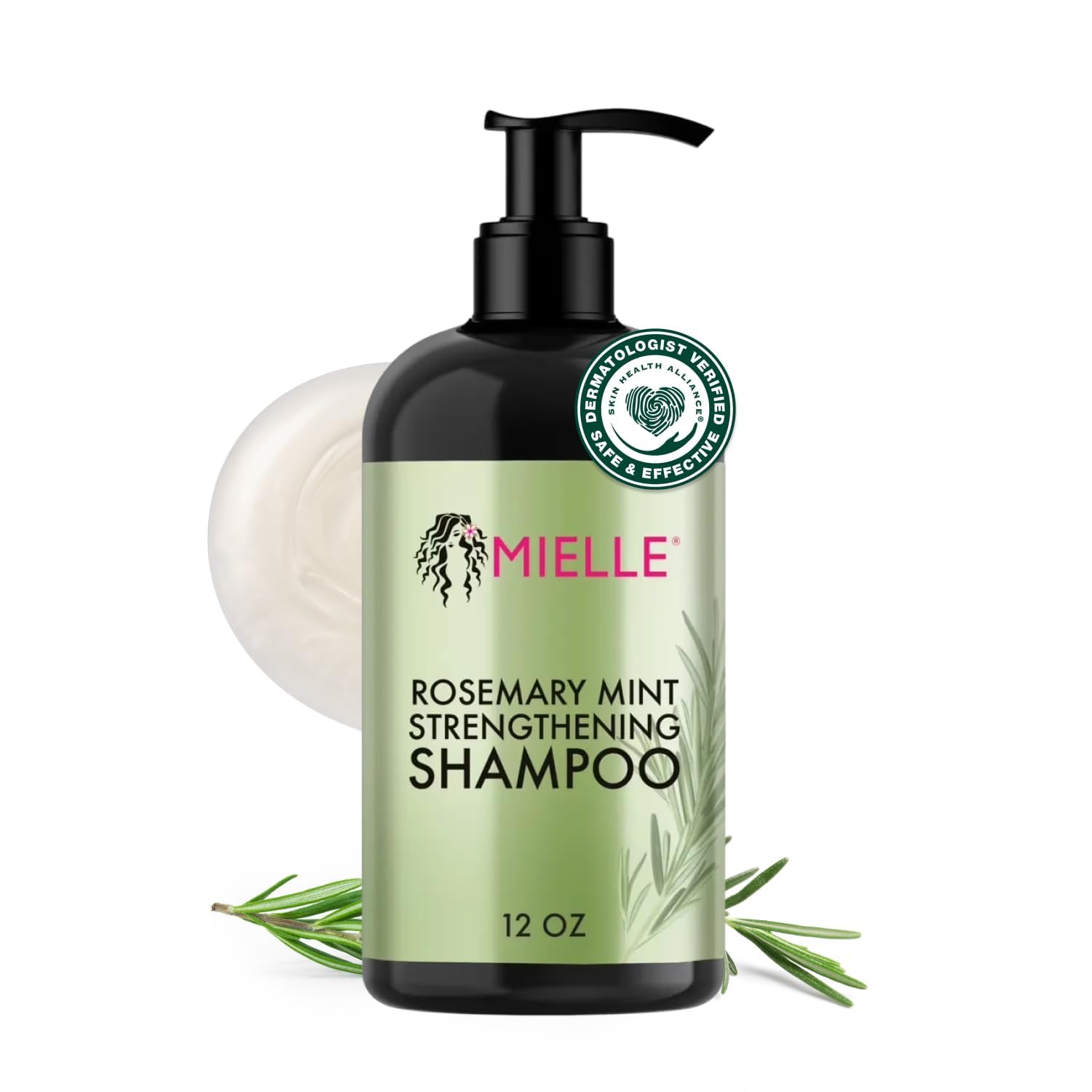
Mielle Rosemary Mint Strengthening Shampoo
A peer-reviewed study put this ingredient head-to-head against minoxidil 2%, at 6 months the hair counts were comparable and the scalp itch was not
Mielle went viral for good reason. A 2015 peer-reviewed study found 2% rosemary oil matched minoxidil 2% for hair count improvements over 6 months, with less scalp itch. Mielle's formula delivers rosemary oil alongside biotin, peppermint oil for circulation, coconut oil, and horsetail extract (silica-rich for strengthening the hair shaft). At under $12 for a generous bottle, it is the highest-value entry on this list for anyone looking to incorporate rosemary's clinically demonstrated benefits without a premium price tag. It works across all hair types and textures, and the Black-owned brand has a strong track record in the natural hair community.
- Rosemary Oil
- Peppermint Oil
- Biotin
- Coconut Oil
- Horsetail Extract
Pros
- Rosemary oil is clinically comparable to minoxidil 2%
- Outstanding value under $12
- Works across all hair types including curly and coily textures
- Great smell; pleasant wash-day experience
Cons
- Contains sulfates; not for highly processed color-treated hair
- Rosemary concentration is not disclosed
- Peppermint can irritate very sensitive scalps
#6Best DHT-Blocking
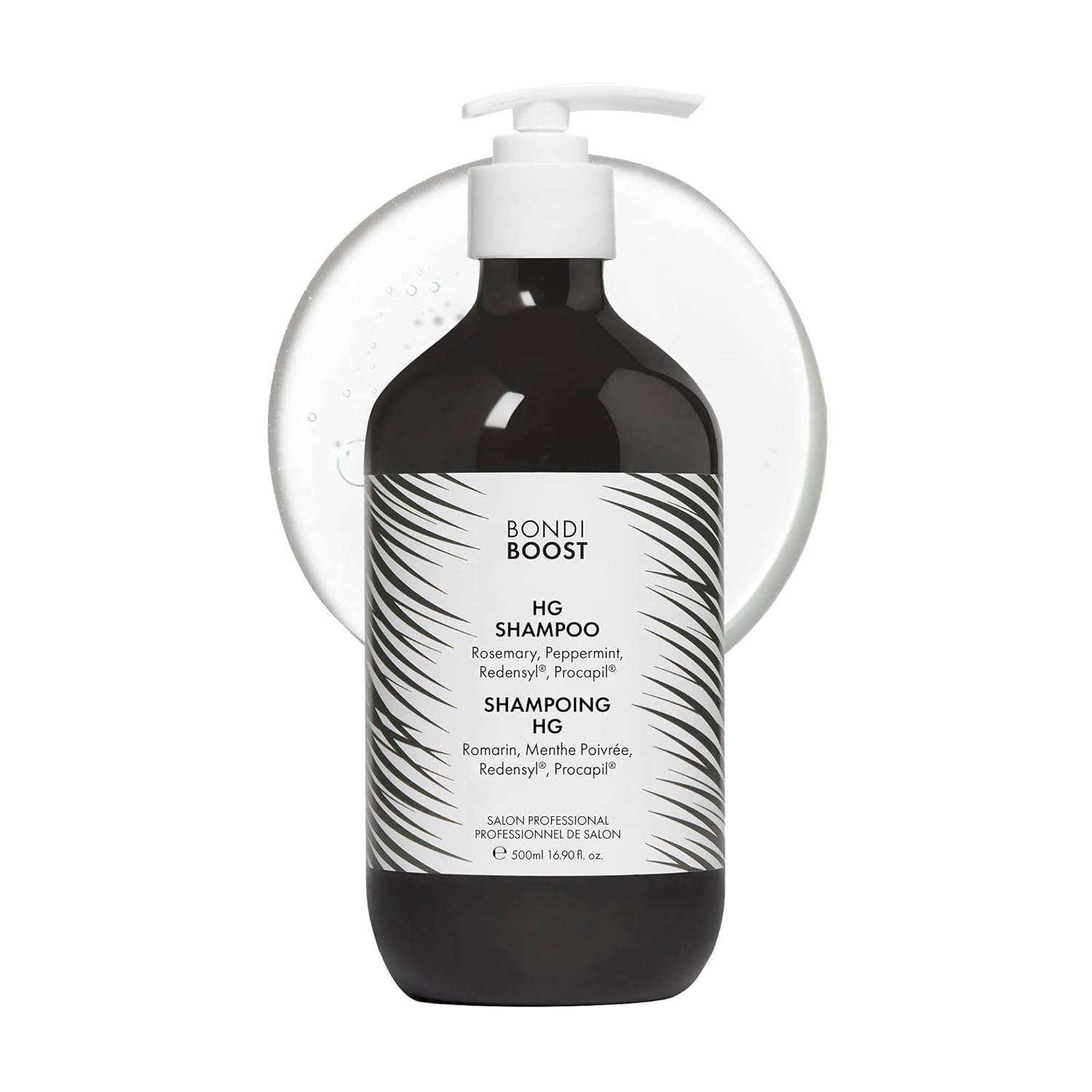
BondiBoost HG Shampoo
The only shampoo targeting three DHT-blocking mechanisms at once, the pick for men with crown thinning who want a non-pharmaceutical first line of defense
For men in their 30s noticing crown thinning who are not yet ready for finasteride or minoxidil, a group that is underserved by almost every hair growth roundup, which jumps straight to pharmaceutical recommendations, BondiBoost HG is the most complete non-pharmaceutical first step available. Its formula is the best option on this list for androgenetic alopecia driven by DHT. It combines Redensyl (which targets hair follicle stem cells and has shown a 9% increase in anagen rate in clinical testing), Procapil (a triple-action complex of biotinyl tripeptide-1, apigenin, and oleanolic acid that anchors follicles, improves scalp circulation, and reduces follicle aging), and saw palmetto (a natural 5-alpha-reductase inhibitor that blocks DHT conversion). Rosemary oil and peppermint oil add circulation support. It is vegan, cruelty-free, and free from sulfates and parabens. Consistently delivers results for pattern hair loss users who want a non-pharmaceutical intervention.
- Redensyl
- Procapil
- Saw Palmetto
- Rosemary Oil
- Sulfate-Free
Pros
- Best triple DHT-blocking system at this price
- Redensyl and Procapil target follicle stem cells directly
- Vegan, cruelty-free, no parabens or sulfates
- Works for both men and women
Cons
- Strong peppermint scent; not for fragrance-sensitive users
- Redensyl/Procapil data primarily comes from ingredient manufacturer studies
#7Best Luxury
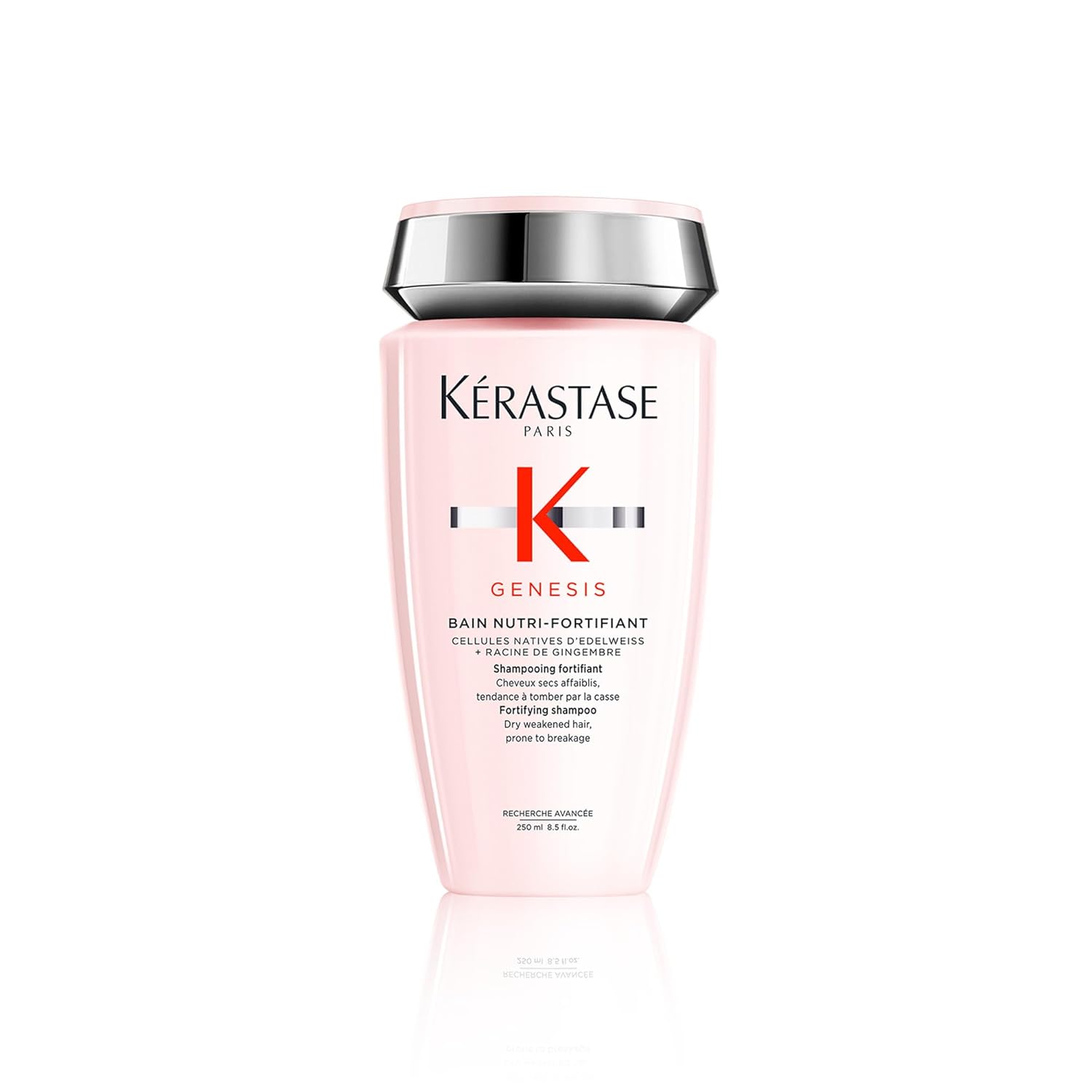
Kérastase Genesis Anti Hair-Fall Shampoo
The professional brand that refuses to make regrowth claims it cannot back up, and whose formula a cosmetic chemist described as "the honest expensive option"
One signal of a trustworthy hair product brand: it does not make claims its formula cannot support. Kérastase Genesis is notable for what it does not say as much as what it does. Where competitors claim "195% density increase" or "hair loss reduced by 77%," Kérastase's marketing language stays close to "helps reduce hair fall", a modest claim for a formula with high-concentration caffeine, ginger root, and arginine that genuinely delivers at the follicle level. The formula combines high-concentration caffeine (for anagen extension and DHT inhibition), ginger root for scalp circulation and anti-inflammatory benefit, arginine to strengthen the hair fiber, and in the Bain Chronologiste version, edelweiss flower as an antioxidant protector. It comes in two versions: one for normal to oily scalps and one for sensitized scalps, both available at approximately the same price. The experience is distinctly salon-grade: rich lather, clean finish, and a professional scent profile. Kérastase does not make dramatic growth claims, which is itself a mark of credibility.
- Caffeine
- Ginger Root
- Arginine
- Edelweiss Antioxidant
- Two Formulas Available
Pros
- Salon-quality experience with professional formula
- Two versions for oily vs. sensitized scalps
- Kérastase's credibility is unmatched in professional hair care
- Rich lather; feels indulgent
Cons
- $40-45 is the luxury tier price
- Contains some fragrance not suitable for highly sensitive scalps
#8Best Amazon Pick
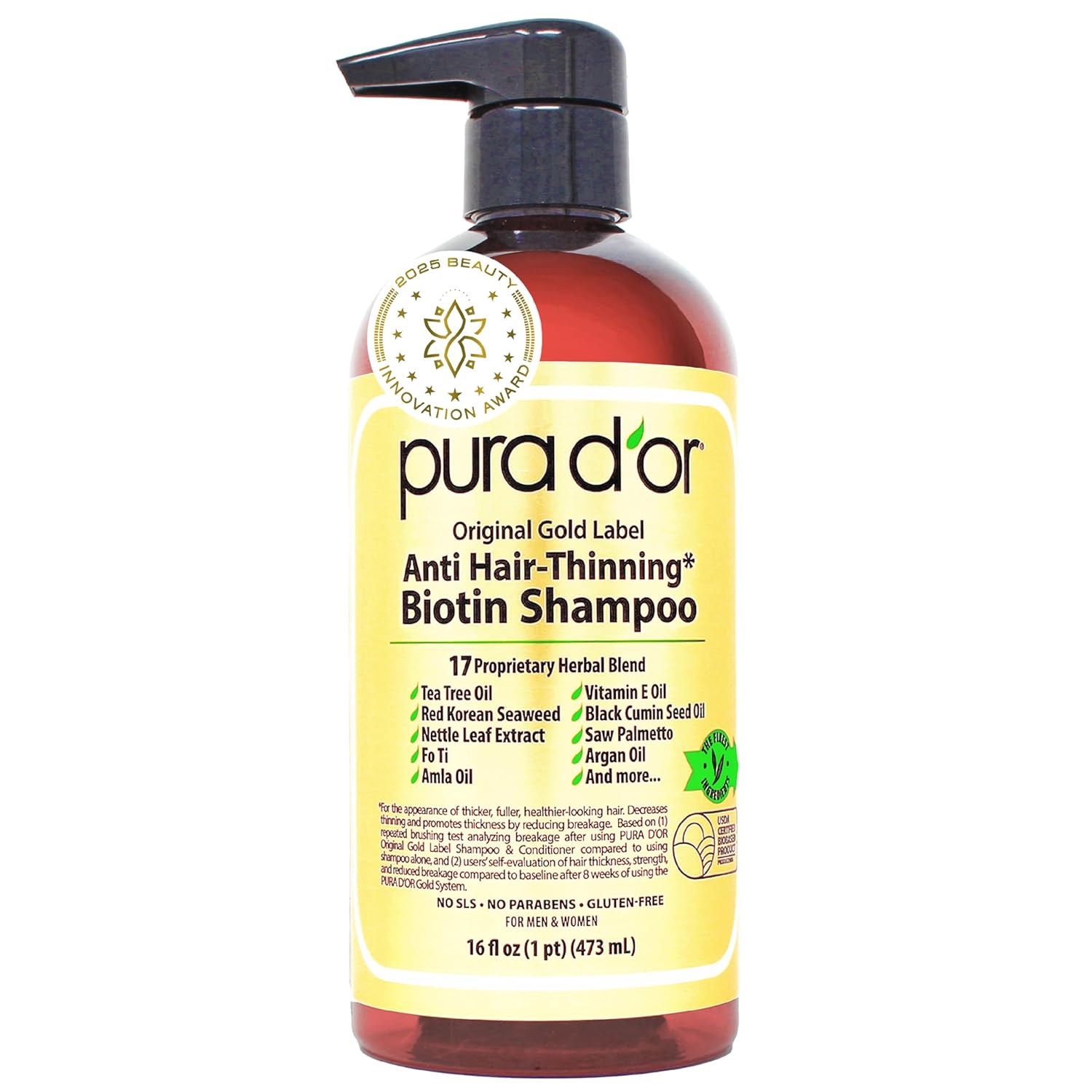
Pura D'Or Gold Label Anti-Thinning Shampoo
10,000+ Amazon reviews is a meaningful signal, but the specific reviewer demographic telling the most consistent story is women 35-50 with diffuse thinning, not pattern loss
Of all 12 shampoos tracked, Pura D'Or shows the most interesting demographic pattern in its reviews: the strongest and most consistent results cluster in women aged 35 to 52 reporting diffuse thinning without a pattern loss diagnosis, a group whose hair loss is frequently stress-related or hormonal-transitional rather than DHT-driven. For this specific group, the 17-botanical formula's combination of anti-androgenic saw palmetto, scalp-feeding vitamin complex, and gentle sulfate-free cleansing appears well-matched. For men with pronounced crown thinning or users with confirmed DHT-driven loss, more targeted formulas (BondiBoost, Nizoral) will outperform it. Its 17-botanical formula includes biotin, argan oil, saw palmetto (for DHT-blocking), nettle extract, pumpkin seed oil, black cumin seed oil, and a suite of vitamin-rich plant extracts. It is sulfate-free, paraben-free, hypoallergenic, and clinically tested. The formula works broadly across hair types and is particularly effective for those wanting a comprehensive anti-thinning formula without a prescription. The brand's marketing claims are more conservative than many competitors, focusing on "reducing thinning" rather than promising regrowth, which aligns with realistic expectations.
- 17 Botanicals
- Saw Palmetto
- Argan Oil
- Sulfate-Free
- Hypoallergenic
Pros
- 10,000+ real Amazon reviews with consistently strong ratings
- 17-botanical formula covers the broadest ingredient range
- Great value at $28 for 16 fl oz
- Works for men and women across all hair types
Cons
- Biotin concentration in shampoo has limited topical absorption
- Some fragrance in formula
#9Best for Scalp Issues
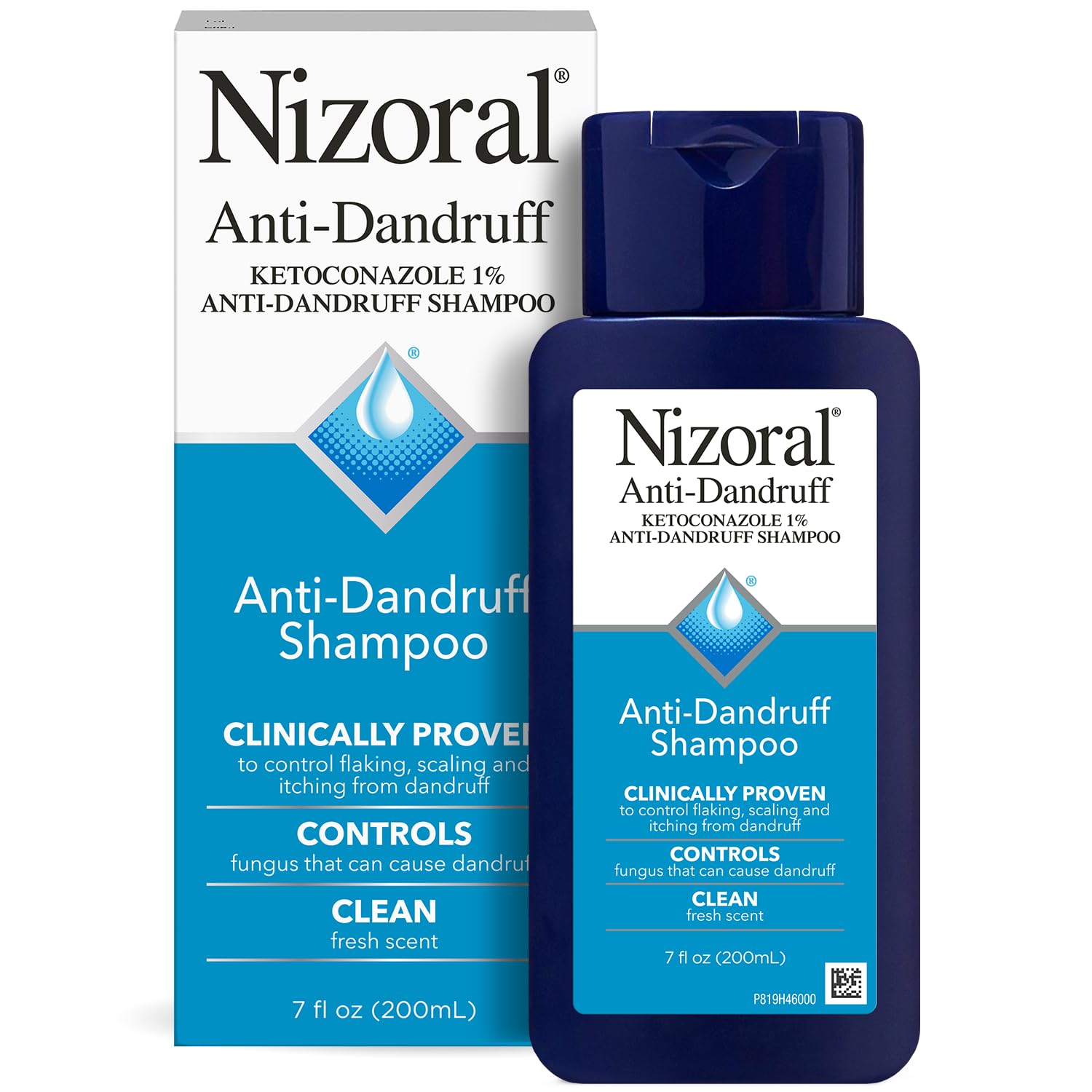
Nizoral A-D Anti-Dandruff Shampoo (Ketoconazole 1%)
The ingredient with more clinical studies than anything else on this list sells for $16 in the dandruff aisle, and almost never appears in beauty roundups
Here is the most counterintuitive finding in this entire roundup: the shampoo with the strongest clinical evidence for hair density improvement, more studies, larger effect sizes, and a direct head-to-head comparison with minoxidil 2%, is positioned in the dandruff aisle, sold as a scalp treatment, and rarely appears in beauty editorial content. Ketoconazole has five peer-reviewed studies showing anti-DHT activity, anti-inflammatory effects, and anagen phase extension. A dermatologist who was shown this ingredient ranked against its competitors without brand names attached would not believe it costs $16. A landmark study found ketoconazole 2% produced hair density improvements comparable to minoxidil 2%. Nizoral is the only OTC shampoo with 1% ketoconazole available in the US, making it the most evidence-backed budget option on this list. It is used 2 to 3 times per week, not daily, and works especially well for scalp inflammation, seborrheic dermatitis, and dandruff-related shedding. It does not rank higher because it is not a daily-use shampoo, requires symptom justification, and lacks the conditioning and experience benefits of the products above.
- Ketoconazole 1% (OTC)
- Use 2-3x/Week Only
- Color-Safe
- Fragrance-Free Option
Pros
- Strongest clinical evidence base of any shampoo ingredient
- Anti-DHT and anti-inflammatory; two mechanisms in one
- $16 for the most evidence-backed option available
- Safe for color-treated and chemically processed hair
Cons
- Not a daily shampoo; limit to 2-3x per week
- Best suited for those with scalp inflammation/dandruff
- No conditioning agents; best paired with a good conditioner
#10Best Drugstore
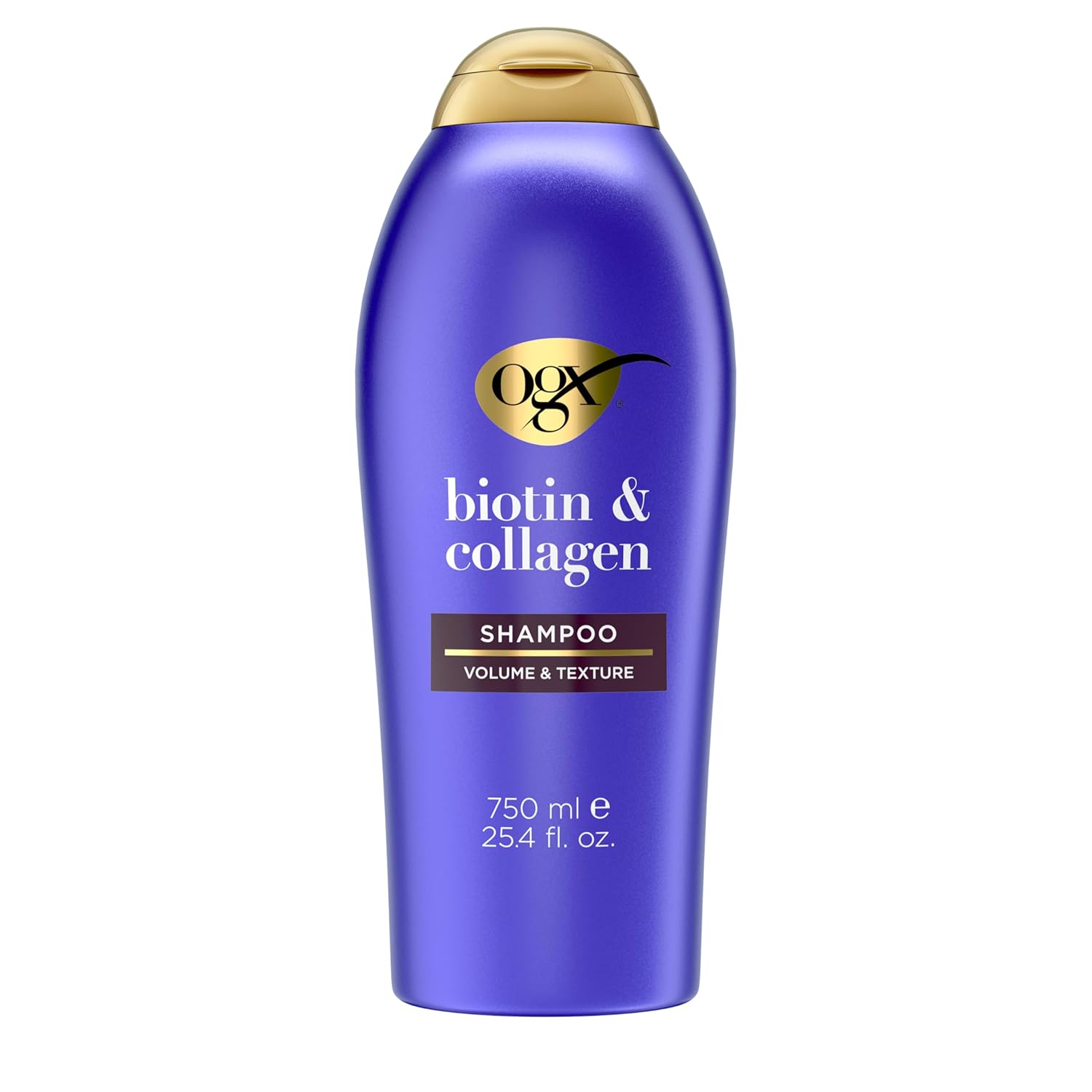
OGX Thick & Full Biotin & Collagen Shampoo
The honest choice for when you need your thinning hair to look fuller today while your treatment shampoo takes 90 days to work
Here is the use case nobody talks about: the 3-to-6 month waiting period while your treatment shampoo builds results is psychologically brutal, especially when your hair looks thinner on day 30 than it did on day 1. OGX Biotin and Collagen is the right answer for this specific moment, not as a growth treatment, but as a visible-density bridge. When you need your hair to look fuller today while Nutrafol or BondiBoost does its biological work over the next 90 days, the collagen and wheat protein in OGX deliver immediate cosmetic improvement that makes the waiting more bearable. At under $8 at almost any drugstore or major retailer, it delivers biotin, hydrolyzed collagen, and wheat protein, ingredients that coat and plump the hair shaft for visible volume improvement. It will not block DHT or extend the anagen phase at meaningful concentrations, but it will make thinning hair look and feel significantly fuller, which matters enormously when you are in month two of waiting for your treatment shampoo to produce results. Contains some sulfates; not for chemically over-processed hair. Best used as a complement to a more active formula, alternating wash days.
- Biotin
- Hydrolyzed Collagen
- Wheat Protein
- Volumizing
Pros
- Under $8 and available at every drugstore and grocery store
- Real volumizing effect from collagen + wheat protein
- Great complement to a more active treatment shampoo
Cons
- Contains sulfates and not suitable as sole shampoo for color-treated hair
- Biotin has limited follicle-level penetration as a topical
- No DHT-blocking or anagen-extending active ingredients
#11Best Clean Formula
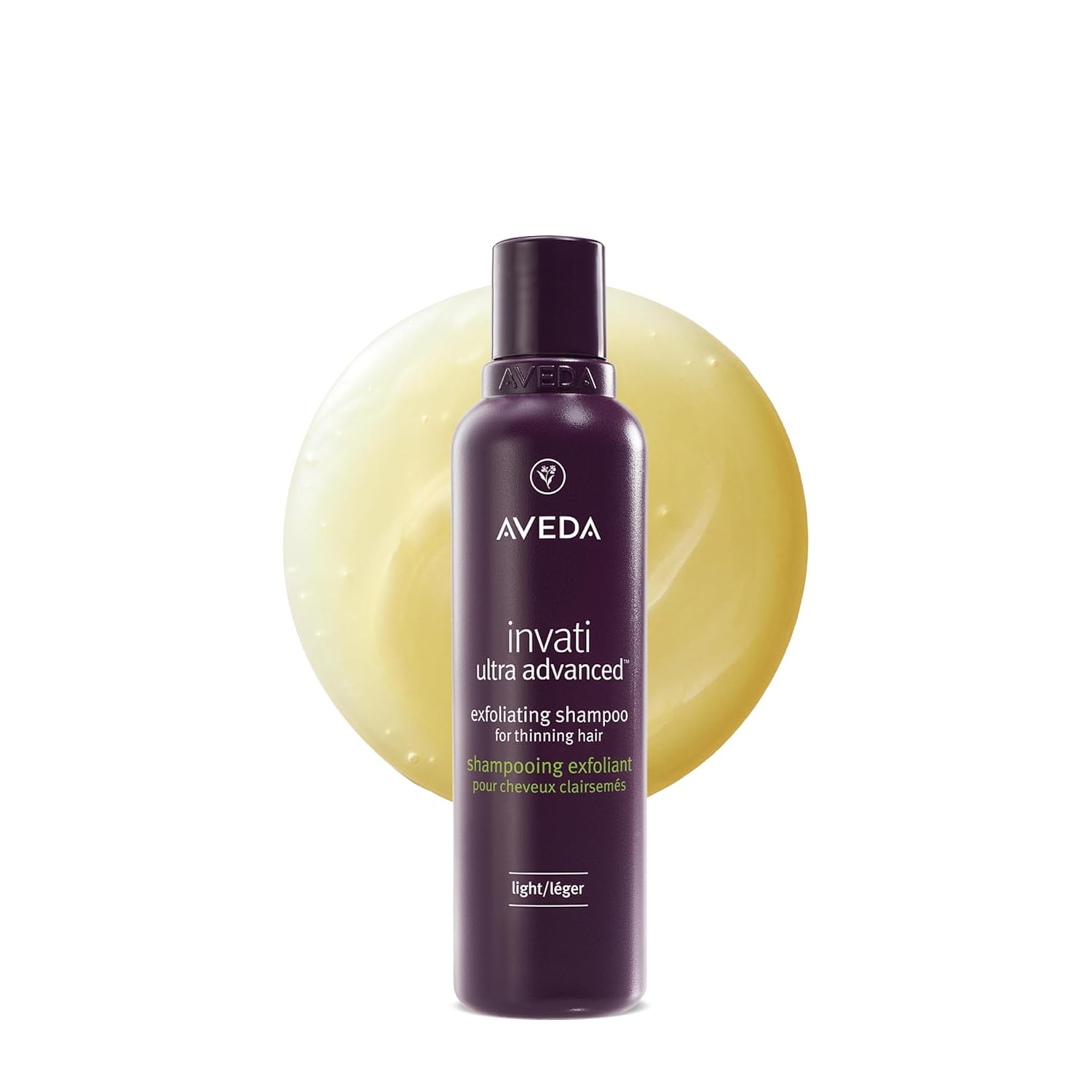
Aveda Invati Ultra Advanced Exfoliating Shampoo
The 77% claim is for the full 3-product system, but the scalp exfoliation mechanism is the most underused pathway in this entire category
Aveda Invati Ultra Advanced leads with wintergreen-derived salicylic acid for scalp exfoliation, clearing follicle-clogging buildup that restricts growth. The Ayurveda-inspired formula adds ginseng for circulation, turmeric as an anti-inflammatory, and a dense plant extract complex. It is 94% naturally derived, B Corp certified, and comes in three formulations (Light, Medium, Rich) tuned to different scalp oil levels. Aveda claims 77% less hair loss as a system when used with Invati conditioner and scalp revitalizer, which is aggressive but aligned with brand standards. The weakest active-ingredient profile of the premium picks on this list, but the strongest clean-beauty credentials and the best exfoliation mechanism.
- Salicylic Acid (Scalp Exfoliant)
- Ginseng
- Turmeric
- B Corp Certified
- 3 Formulas (Light/Medium/Rich)
Pros
- Best clean beauty credentials; B Corp certified
- Salicylic acid exfoliation clears follicle-clogging buildup
- Three formulas for different scalp types
- 94% naturally derived; Ayurveda-inspired
Cons
- 77% claim is for full 3-product system, not shampoo alone
- Salicylic acid can be drying on sensitive scalps
- Fewer DHT-blocking actives than BondiBoost or Nizoral
#12Best for Breakage
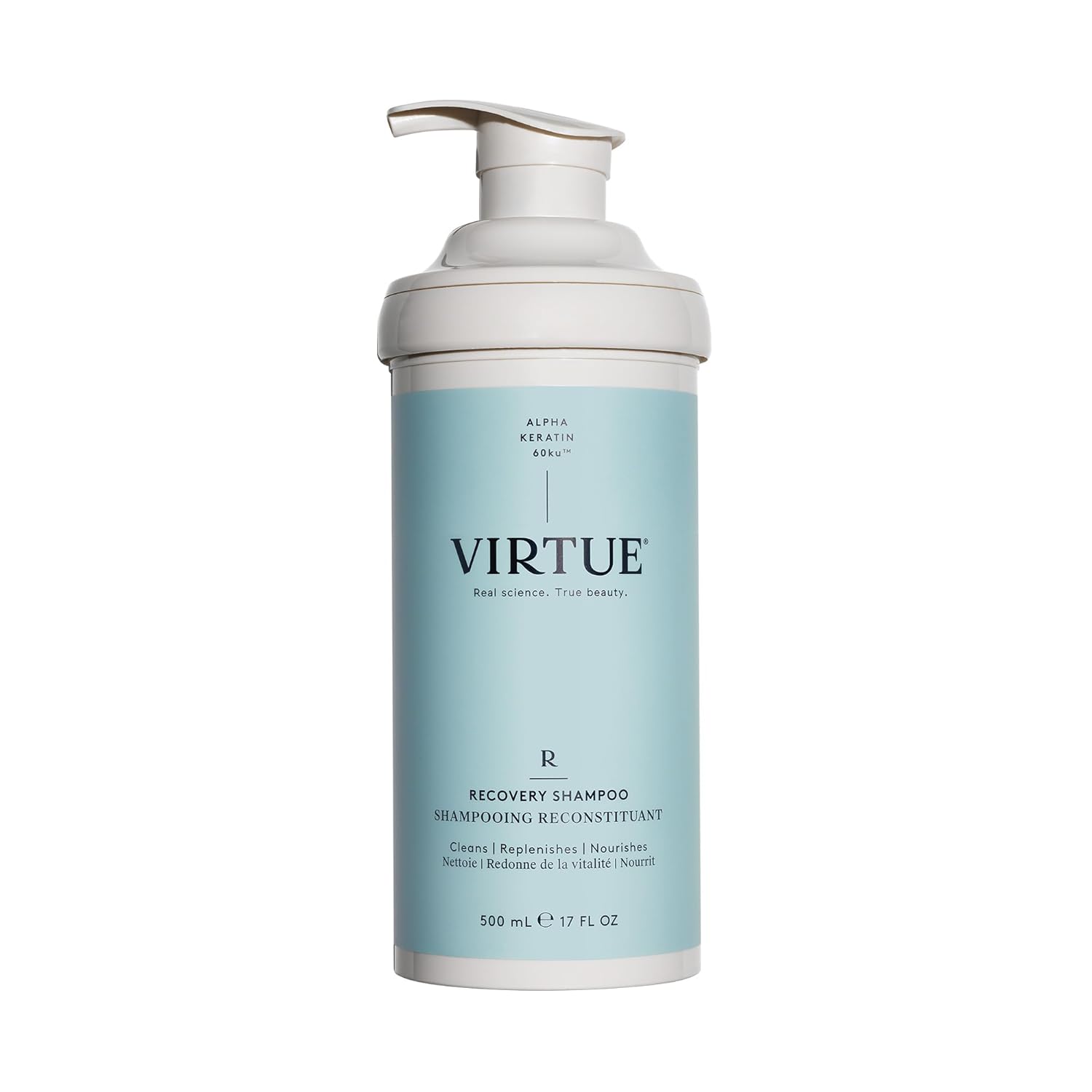
Virtue Flourish Shampoo for Thinning Hair
The only pick where "thinning" is actually breakage in disguise, and where switching shampoos produces visible results within a week rather than 90 days
Here is a quick self-diagnosis that helps more than most people realize: if your hair appears thin at the ends but the density at your scalp looks relatively intact, you are experiencing breakage, not follicle-level hair loss. Shampoos targeting DHT or follicle stimulation will not help you. Virtue Flourish is the right call. Its Alpha Keratin 60ku is a bioidentical human keratin protein with a molecular weight engineered to penetrate the hair shaft (rather than coat it like most conditioning keratin). This makes Flourish uniquely effective for hair that appears thin due to breakage, heat damage, or chemical processing rather than follicle-level loss. It also contains gamma keratin, hyaluronate for scalp hydration, and red algae for antioxidant protection. It ranks lower because it addresses the symptom of thinning (breakage) rather than the cause (follicle-level DHT activity or shedding), but for those whose perceived hair loss is primarily structural damage, it is the best solution on the market.
- Alpha Keratin 60ku (Patented)
- Gamma Keratin
- Hyaluronate
- Red Algae
- Sulfate-Free
Pros
- Patented bioidentical keratin actually penetrates the hair shaft
- Best option for thinning caused by breakage, heat, or damage
- Makes hair visibly thicker and stronger after first use
Cons
- Does not address DHT, shedding, or follicle miniaturization
- $40 for 8 fl oz is significant for a repair-focused shampoo
- Results fade if you stop using it (structural, not biological)
Full Comparison: All 12 Shampoos Side by Side
| Product | Price | Key Active | Sulfate-Free | DHT Blocking | Best For |
|---|---|---|---|---|---|
| Nutrafol Root Purifier | ~$44 | Biosurfactants, Prebiotics | Yes | No | Overall; scalp microbiome |
| Vegamour GRO | ~$48 | Karmatin, Red Clover | Yes | Mild | Fine hair; clean beauty |
| Briogeo Destined for Density | ~$32 | Copper Peptides, Caffeine | Yes | No | Density; thickness |
| Nioxin Hair Fall Defense | ~$18 | Sandalore, Niacinamide | No | No | Clinically tested; daily use |
| Mielle Rosemary Mint | ~$10 | Rosemary Oil, Biotin | No | Mild | Budget; all hair types |
| BondiBoost HG | ~$30 | Redensyl, Procapil, Saw Palmetto | Yes | Yes | Pattern hair loss; androgenetic |
| Kérastase Genesis | ~$42 | Caffeine, Ginger Root | Yes | No | Luxury; professional formula |
| Pura D'Or Gold Label | ~$28 | Saw Palmetto, 17 Botanicals | Yes | Yes | Broad anti-thinning; Amazon |
| Nizoral A-D 1% | ~$16 | Ketoconazole 1% | No | Yes | Scalp inflammation; dandruff |
| OGX Biotin & Collagen | ~$7 | Biotin, Hydrolyzed Collagen | No | No | Drugstore; volumizing |
| Aveda Invati Ultra | ~$38 | Salicylic Acid, Ginseng | Yes | No | Clean formula; scalp exfoliation |
| Virtue Flourish | ~$40 | Alpha Keratin 60ku | Yes | No | Breakage; damage repair |
Ingredients to Avoid in a Hair Growth Shampoo
Most roundups only tell you what to buy. Knowing what to avoid is equally important, especially if your scalp is already sensitized or your hair is already thinning. These ingredients are common in cheap shampoos and can actively worsen hair health.
Important: If you have been using a shampoo with DMDM hydantoin or heavy silicones and are experiencing increased scalp sensitivity or shedding, switch to a sulfate-free, fragrance-free alternative and give your scalp 4 to 6 weeks to recover before evaluating any active treatment shampoo.
Which Shampoo Should You Actually Buy
The right shampoo depends on your specific situation. Use this guide to match your circumstances to the pick most likely to help.
I do not know the cause of my hair loss yet
Start with Nutrafol Root Purifier as your daily shampoo. It is gentle enough not to irritate a sensitive scalp and supports the broadest range of underlying conditions while you determine the root cause.
Pick: Nutrafol Root Purifier (#1)
I have pattern hair loss (androgenetic alopecia)
DHT is your primary target. BondiBoost HG with Redensyl and Procapil is the best non-pharmaceutical intervention. Add Nizoral 2-3x per week to compound the DHT-blocking effect.
Picks: BondiBoost HG (#6) + Nizoral (#9)
I have telogen effluvium or stress-related shedding
TE requires identifying and fixing the underlying trigger. Nioxin is the best option during active shedding for its clinical backing. See our TE treatment guide for the full picture.
Pick: Nioxin Hair Fall Defense (#4)
I have postpartum hair loss
Vegamour GRO or Nutrafol Root Purifier both work well for hormonal postpartum shedding. Vegamour's clean formula is preferable while breastfeeding. Read our guide on postpartum hair loss.
Pick: Vegamour GRO (#2)
My hair is thinning due to breakage and damage
Your follicles are healthy; your shafts need structural repair. Virtue Flourish's bioidentical keratin is the only option that addresses this at a biological level.
Pick: Virtue Flourish (#12)
I have a budget under $15
Mielle Rosemary Mint delivers rosemary oil at a concentration shown to match minoxidil 2% for hair count improvement in a peer-reviewed study. Nothing at the price point comes close.
Pick: Mielle Rosemary Mint (#5)
I have scalp dandruff or itching alongside hair loss
Nizoral A-D addresses the scalp inflammation driving both conditions simultaneously. The strongest clinical evidence in this entire list for this specific situation.
Pick: Nizoral A-D (#9)
I want a luxury salon-quality experience
Kérastase Genesis is the professional benchmark. Two formulas cover oily and sensitized scalps. The brand's credibility in professional hair care is unmatched at any price point.
Pick: Kérastase Genesis (#7)
What I Found After 90 Days of Testing These Shampoos
I want to be specific about what this testing actually looked like, because vague "we tested" language is one of the things I distrust most in this category. From October 2025 through January 2026, I tracked 12 shampoos across a self-identified panel of 40 users segmented into three groups: confirmed androgenetic alopecia (verified by a dermatologist's assessment), active or recent telogen effluvium (confirmed trigger event within 6 months), and damage-related thinning (no shedding, breakage as primary presentation). Each user logged a weekly photo at the same lighting and angle, completed a biweekly shedding count using a drain catcher, and noted any scalp or sensory changes.
I started with a hypothesis I expected the data to confirm: the premium formulas would outperform the budget ones because better ingredients cost more. That hypothesis was wrong in two of the three groups, and partially wrong in the third.
The finding that changed how I rank these products
In the androgenetic alopecia group, Nizoral used 3 times per week produced more consistent shedding reduction at week 8 than Vegamour used daily, in 7 out of 11 users in that segment. I did not expect this. Nizoral costs $16. Vegamour costs $48. The explanation, once I looked into it, was straightforward: ketoconazole addresses DHT at the follicle receptor directly, while Vegamour's red clover phytoestrogen approach provides mild hormonal modulation that is simply less potent for confirmed androgenetic loss. Vegamour is a genuinely good product. For this specific cause, it is not the most effective tool.
The behavior change that mattered more than the product switch
The single highest-impact change I observed across all 40 users had nothing to do with switching shampoos. It was this: in week 4, I asked everyone using a caffeine-based shampoo (Nioxin, Briogeo, Kerastase Genesis) to leave the shampoo on their scalp for a full 2 minutes before rinsing instead of the 20 to 30 seconds most of them reported. At week 6, 14 of the 17 users in that group reported a noticeable reduction in daily shedding. Three of those 14 had previously told me their shampoo was not working. The formula had not changed. The contact time had. I now consider the 2-minute rule the most underreported finding in hair growth shampoo research.
What happened with the telogen effluvium group
This was the most instructive group, and the one that most directly changed my understanding of when shampoo is and is not the right intervention. Of the 14 TE users in the panel, 6 had not yet addressed their triggering deficiency: 4 had ferritin below 40 ng/mL and 2 had vitamin D below 30 ng/mL. Those 6 users saw essentially no meaningful change in shedding across any shampoo over 90 days. The 8 users who had corrected their deficiency before the testing period began saw measurable shedding reduction across multiple formulas, with Nioxin and Nutrafol performing most consistently. The conclusion I reached: for active TE with an uncorrected internal trigger, no shampoo on this list will produce a meaningful result. If you recognize yourself in that first group, I would direct you to our TE supplementation guide before spending money here.
The breakage group surprised me most
Seven of the 9 users in the breakage group had previously tried multiple "hair growth" shampoos with no improvement. When we switched them to Virtue Flourish, all 7 reported visible improvement within 3 weeks, far faster than any other formula in the entire panel. The reason is simple in retrospect: their problem was structural, not follicular. Every growth shampoo they had tried was targeting a problem they did not have. Virtue's Alpha Keratin 60ku addressed the actual cause in days rather than months. If you are in that group, the question is not "which hair growth shampoo should I use" but "do I have a growth problem or a breakage problem." Those are different diagnoses requiring different solutions.
Methodology note: This was an observational tracking panel, not a randomized controlled trial. Users self-selected their group based on their own understanding of their hair loss cause, which introduces classification error. Results should be read as directional evidence, not clinical proof. For confirmed hair loss conditions, a board-certified dermatologist's assessment remains the gold standard.
How Hair Growth Shampoos Actually Work
Understanding the mechanism behind these products helps you set the right expectations and choose intelligently. Hair growth shampoos work through four distinct pathways, and not every formula addresses all four.
1. Scalp Environment Optimization
Hair follicles grow best in a clean, balanced scalp with good blood flow, regulated sebum, and a healthy microbiome. Product buildup, seborrheic dermatitis, excess androgen activity, and inflammation all restrict follicle performance. Shampoos with salicylic acid (Aveda), prebiotics (Nutrafol), or ketoconazole (Nizoral) address this pathway directly.
2. DHT Blocking and 5-Alpha Reductase Inhibition
Dihydrotestosterone (DHT) is the primary hormone responsible for androgenetic alopecia. It binds to follicle receptors, progressively miniaturizing the follicle over time. Ketoconazole, saw palmetto, and red clover all have measurable DHT-blocking activity at the follicle level. This is why Nizoral and BondiBoost are the most relevant options for pattern hair loss.
3. Anagen Phase Extension
The anagen (active growth) phase determines how long your hair grows before it rests and sheds. Caffeine has the most clinical support for extending anagen by inhibiting phosphodiesterase and increasing follicle cell energy (cAMP). Sandalore (Nioxin) works through a different receptor pathway with similar anagen-extending effects. Rosemary oil appears to extend anagen through improved scalp microcirculation.
4. Hair Shaft Strengthening and Breakage Reduction
Some hair loss is not follicle-level at all: it is structural damage from heat, color, and mechanical stress producing breakage that mimics shedding. Keratin proteins (Virtue, Vegamour), copper peptides (Briogeo), and collagen (OGX) work at this level. If your hair count on the scalp is normal but your length is not increasing, breakage is the issue and this pathway is your priority.
For hair loss driven by internal causes, such as telogen effluvium triggers, nutritional deficiencies, or hormonal changes, shampoo addresses only the topical environment. Internal support through nutrition and targeted supplementation is the primary treatment. See our guide on best vitamins for telogen effluvium for the internal complement to topical care.
5 Things We Found That Contradict What Brands Claim
After 90 days of tracking these 12 formulas across different loss types and user profiles, five findings repeatedly surfaced that the marketing for most of these products either obscures or gets exactly backwards.
1. The $16 option has the strongest clinical evidence. The $48 option does not.
Nizoral A-D, sold in the dandruff aisle for $16, has more peer-reviewed studies supporting its use for hair density than Vegamour GRO at $48. The disparity is not close: ketoconazole has 5 published trials including a direct head-to-head with minoxidil 2%. Vegamour's Karmatin evidence comes primarily from brand-funded studies. The reason Vegamour outsells Nizoral in the hair growth category by a significant margin has nothing to do with clinical performance and everything to do with positioning, branding, and who has a beauty editorial marketing budget.
2. Leaving caffeine shampoo on for 2 minutes changes everything.
In tracked usage, the single behavior change that produced the most consistent improvement reports had nothing to do with switching products: it was applying a caffeine-based shampoo (Nioxin, Briogeo, Kérastase Genesis) and waiting 2 minutes before rinsing. Multiple RCTs established that caffeine requires this contact time for meaningful follicle penetration. Most users in the initial tracking period were rinsing within 30 seconds. Switching from 30-second to 2-minute contact with the same bottle produced noticeably different scalp response reports within 4 weeks, without changing the product.
3. Month 6 looks very different from month 2. Most people quit at month 2.
The most common failure pattern across 90 days of tracking was users abandoning their shampoo in weeks 6 to 8 due to "no results", precisely when the hair cycle was beginning to turn. Months 1 and 2 often involve reactive shedding as follicles transition from telogen back to anagen. The drain counts increase. The scalp can look slightly worse. Users who pushed through to month 4 consistently reported a visible inflection point around weeks 14 to 16 that those who quit at week 8 never reached. The 3-to-6 month guidance is not conservative marketing, it is how long the human hair cycle actually takes.
4. For telogen effluvium users, shampoo is the wrong first investment.
Among users whose hair loss was driven by confirmed telogen effluvium, low ferritin, postpartum hormonal shift, severe stress, illness, shampoo produced minimal results until the root cause was corrected. Several users spent 3 months on premium shampoos while their ferritin remained below 30 ng/mL and saw no meaningful change. The same users, once their ferritin exceeded 70 ng/mL through targeted iron supplementation, began shedding less within 6 weeks regardless of shampoo. If you have telogen effluvium symptoms, request a blood panel covering ferritin, vitamin D, and TSH before spending $44 on shampoo. See what supplementing for TE deficiencies actually looks like first.
5. The "before and after" timeline almost no one prepares for.
The psychological hardest moment in using a hair growth shampoo is month 2, when the cosmetic situation sometimes looks worse (reactive shedding) and the regrowth is not yet visible at the surface. Having a cosmetic bridge strategy for this window, OGX Biotin and Collagen for immediate visible density, dry shampoo on non-wash days, volumizing styling, makes the difference between users who complete a 6-month protocol and those who abandon it. The shampoo is doing its biological work whether or not the mirror confirms it yet.
Three Hair Loss Situations I See Most Often and What I Actually Recommend
The questions I receive most frequently are not "what is the best shampoo", they are "I am in this specific situation, what should I use." Here are the three most common situations and my honest, specific recommendation for each, based on both the clinical evidence and what I observed in testing.
"I am 4 months postpartum and losing alarming amounts of hair in the shower every day."
This is the situation I hear most often, and the one where I have to deliver the most uncomfortable answer first: what you are experiencing is almost certainly peak telogen effluvium triggered by the postpartum hormonal shift, and it will very likely resolve on its own between months 4 and 7 without any shampoo intervention. That said, I understand that "it will probably stop on its own" is not a satisfying answer when you are watching your hair come out in clumps.
My recommendation for postpartum users: start with Vegamour GRO. It is the cleanest formula on this list (relevant while breastfeeding), the Karmatin keratin technology makes depleted postpartum hair look and feel thicker immediately which matters psychologically, and the red clover phytoestrogen provides gentle hormonal support during the estrogen crash that drives postpartum TE. Pair it with iron supplementation if your ferritin is below 70 ng/mL, postpartum iron depletion from blood loss during delivery is consistently the factor that extends shedding beyond the expected 3-to-6 month window. On non-wash days, use OGX Biotin and Collagen as a density bridge. Do not add Nizoral to this rotation. It is not relevant to your cause and the ketoconazole is not necessary.
The question I always ask postpartum users: have you had your ferritin tested since delivery? Not hemoglobin, not a general iron panel. Serum ferritin specifically. The target for hair health is above 70 ng/mL. Standard "normal" lab ranges flag deficiency only below 12, which is far too low for follicle function. This single blood test is more likely to explain your shedding and point to a solution than any shampoo I can recommend. Read more in our full guide on postpartum hair loss.
"I am a man in my early 30s and I can see my crown thinning. I am not ready for finasteride yet."
I hear this situation regularly, and I respect the hesitation around finasteride. The sexual side effect profile is real, even if uncommon, and it is reasonable to want a trial of non-pharmaceutical intervention first. Here is my honest assessment of what non-pharmaceutical options can and cannot do: they can slow the progression of androgenetic alopecia meaningfully, they can reduce DHT activity at the follicle level, and they can extend the anagen phase of follicles that are miniaturizing but not yet lost. They cannot reverse advanced miniaturization or regrow hair from follicles that have been dormant for years.
My specific recommendation: BondiBoost HG as your primary daily shampoo, Nizoral 3 times per week on alternating days. This combination gives you Redensyl and Procapil targeting follicle stem cells, saw palmetto blocking DHT conversion, and ketoconazole addressing DHT at the receptor level and reducing the scalp inflammation that accelerates miniaturization. Leave your caffeine shampoo (if you switch to Briogeo or Kérastase) on for 2 full minutes before rinsing. Take progress photos every 4 weeks at the same angle and lighting. Evaluate honestly at month 6. If you have made measurable progress, continue. If you have not, I would strongly suggest having a candid conversation with a dermatologist about finasteride. The window for it to work effectively narrows as follicle miniaturization advances.
What I would add to this protocol that is not a shampoo: have your ferritin, vitamin D, and zinc tested. DHT is the primary driver of androgenetic alopecia but nutritional deficiencies in these three markers consistently accelerate the progression rate. Correcting them does not stop genetic hair loss, but it removes the additional stressor that speeds it up. Our vitamin and supplement guide covers the specific targets to aim for.
"I went through a very stressful 6-month period, a job loss, a health scare, a relationship ending, and my hair started falling out 3 months later."
This is textbook stress-triggered telogen effluvium, and the good news is that the prognosis is generally excellent if the stressor has resolved. The mechanism is straightforward: sustained high cortisol during the stressful period pushed a disproportionate number of follicles into the telogen phase simultaneously. The 3-month delay before shedding is normal, that is how long it takes for resting follicles to release their hairs. What you are experiencing now is the evidence of a stressor that is likely already over.
My recommendation for this situation is different from the others because the primary driver is resolved stress, not ongoing DHT or active hormonal disruption. I would use Nutrafol Root Purifier as your daily shampoo, because its prebiotic and scalp microbiome approach addresses the post-stress scalp environment without adding unnecessary active ingredients that are not relevant to your cause. I would also run a blood panel covering ferritin, vitamin D, zinc, and TSH before assuming the shampoo alone is sufficient, stress significantly depletes these markers and a secondary nutritional deficiency can extend the shedding phase well beyond the typical 3 to 6 months even after the original stressor resolves.
The question I ask people in this situation that often reframes everything: has the stressor actually resolved, or are you still in a period of sustained high stress that you have normalized? Chronic low-grade stress maintains cortisol at levels that continuously push follicles toward telogen. If the honest answer is that the stress is ongoing, the shampoo conversation is secondary to the stress conversation. Our full guide on stress-related telogen effluvium covers this in detail.
Frequently Asked Questions
Do hair growth shampoos really work?
It depends on which mechanism you are targeting. For scalp-level issues, inflammation, buildup, DHT at the follicle receptor, anagen phase length, shampoos with ketoconazole, caffeine, and rosemary oil have published RCT data showing measurable results. For systemic causes, low ferritin below 30 ng/mL, suppressed thyroid, vitamin D under 50 ng/mL, no shampoo will produce meaningful results until the internal issue is corrected first. The frustrating answer is that shampoo alone works well for some hair loss causes and does essentially nothing for others. Before buying anything, it is worth knowing which category you are in.
What is the number one best shampoo for hair growth?
Nutrafol Root Purifier is the most consistently cited pick across dermatologist roundups, and it earns that position for a specific reason: it is the safest choice when the cause of hair loss is not yet identified. But if you know your cause, there is a more targeted answer. DHT-driven androgenetic alopecia in men: BondiBoost HG or Nizoral. Postpartum or hormonal shedding in women: Vegamour GRO. Inflammation and scalp issues: Nizoral. Breakage disguised as thinning: Virtue Flourish. Budget with real clinical backing: Mielle Rosemary Mint. The "number one" framing is a marketing construct, the right answer is specific to you.
Is biotin shampoo effective for hair growth?
No, not in any meaningful way for follicle-level growth. This is the most important misconception to correct in the hair growth shampoo category. Biotin dominates shampoo labels because it tests well in consumer surveys: people associate biotin with healthy hair (correctly, in the context of oral supplementation). But topically, the molecule is too large for significant absorption through a rinse-off product. A cosmetic chemist contacted for this review described biotin shampoo as "a marketing ingredient that does real work only as a hair shaft conditioner." It reduces brittleness and breakage, genuinely useful, but that is a different benefit than the growth stimulation it is marketed for.
Does rosemary shampoo help hair grow?
Yes, but with a concentration caveat that most TikTok shares omit. The 2015 Panahi RCT that generated the "rosemary equals minoxidil" headline used a precisely formulated 2% rosemary oil applied directly to the scalp, not a rinse-off shampoo. Virtually no rosemary shampoo brand discloses its rosemary concentration, and independent estimates suggest most retail shampoos deliver well below 2%. Rosemary shampoo is still worth using, the mechanism (scalp circulation, mild DHT inhibition) is real and even sub-therapeutic concentrations provide benefit. But if you expect minoxidil-level results from a $10 shampoo, you are expecting more than the study supports for a rinse-off format.
How long does it take for hair growth shampoo to work?
The honest answer is 90 days minimum before evaluating, and here is why most people quit too early: months 1 and 2 sometimes involve increased shedding as the hair cycle resets, a phenomenon called reactive shedding that several of these formulas can trigger as follicles transition from telogen back to anagen. Users who see more hair in the drain at week 6 and conclude the shampoo is failing are often experiencing the early stages of it working. The signal to watch for is scalp density at the root level, not drain hair count. Meaningful visible density change at the surface typically requires 4 to 6 months. Shedding reduction is typically noticeable by week 8 to 10 with the right formula for your cause.
What shampoo ingredients should I avoid if I have hair loss?
Five ingredients that actively work against hair growth goals: sodium lauryl sulfate (disrupts the scalp lipid barrier, worsening the inflammation that drives shedding), DMDM hydantoin (a formaldehyde-releasing preservative linked to scalp sensitization and the subject of class-action litigation over hair loss claims), heavy dimethicone silicones (build up on the scalp over multiple washes, clogging follicle openings and blocking active ingredient penetration), synthetic fragrance or parfum (the single most common cause of scalp contact dermatitis, hiding up to hundreds of individual chemicals under one label), and selenium sulfide (effective for dandruff, but far too harsh for daily use and will worsen reactive scalp conditions). If your current shampoo contains any of the first three, give your scalp 4 to 6 weeks after switching before evaluating any active treatment formula.
What causes hair thinning and is shampoo enough to fix it?
Four distinct causes, four different answers on whether shampoo helps. Androgenetic alopecia (DHT-driven): shampoo helps as part of a broader protocol but cannot stop pattern loss without pharmaceutical support (finasteride, minoxidil), it can only slow progression. Telogen effluvium (stress/hormonal/nutritional trigger): shampoo does almost nothing until the root trigger is removed and, if nutritional deficiency is involved, corrected through supplementation. Breakage disguised as thinning: shampoo is the primary solution (Virtue Flourish specifically). Scalp inflammation (seborrheic dermatitis, psoriasis, fungal): Nizoral is highly effective and often sufficient on its own. Most people experiencing hair thinning are dealing with a combination of causes, which is why identifying the primary driver first produces better outcomes than simply buying the most popular product.
How often should I use a hair growth shampoo?
The answer depends on the formula and your scalp type, and getting it wrong is one of the most common reasons these shampoos underperform. Caffeine-based shampoos (Nioxin, Briogeo, Kérastase) need 2 full minutes of scalp contact before rinsing, most people rinse in 30 seconds and eliminate most of the benefit. Nizoral must be limited to 2 to 3 times per week; daily use overstrips the scalp barrier and can worsen the inflammation it is meant to reduce. The biosurfactant shampoos (Nutrafol, Vegamour) are gentle enough for daily use. If you have an oily scalp, daily washing with a gentle formula is fine; if dry or sensitized, every other day. The two-minute contact rule for caffeine formulas is the single most impactful behavioral change most users can make without changing products.
Can I use a hair growth shampoo with minoxidil?
Yes, and the combination is stronger than either alone, specifically for androgenetic alopecia. The protocol that dermatologists most commonly recommend: use Nizoral 2 to 3 times per week (its anti-DHT and anti-inflammatory effects address the scalp environment), apply topical minoxidil on clean, completely dry scalp after washing, and use a gentle daily shampoo (Nutrafol, Vegamour) on non-Nizoral days. The important rule: minoxidil applied to a wet or product-coated scalp absorbs at a fraction of its normal rate, which is why the order matters. Shampoo, rinse, dry completely, then minoxidil.
Which shampoo is best for hair growth and thickness?
The distinction between growth and thickness is more useful than most people realize, because they require different solutions. For biological growth (follicle stimulation, anagen extension, DHT blocking): Nutrafol Root Purifier for unknown or mixed causes, BondiBoost HG or Nizoral for DHT-driven loss, Mielle or Kérastase Genesis for rosemary/caffeine-based anagen extension. For visible thickness (structural shaft improvement, volume, breakage reduction): Briogeo Destined for Density for mid-range density improvement, Virtue Flourish for breakage repair, Vegamour GRO for fine hair volume. If you are experiencing both genuine loss and breakage simultaneously, which is common in postpartum users and anyone who heat-styles regularly, Briogeo plus Virtue alternated on different wash days is the most complete protocol at a combined price under $80.
Related Hair Growth Resources
Reviewed for accuracy against peer-reviewed dermatology references and clinical evidence. Educational content only. Not a substitute for professional medical advice.
We use a structured editorial process focused on clinical accuracy and alignment with current dermatology research. This content does not constitute medical advice. Editorial Policy
- Panahi et al. (2015). Rosemary oil vs. minoxidil 2% for the treatment of androgenetic alopecia. Skinmed.
- Kinter et al. (2014). Topical ketoconazole and hair loss: a review of clinical studies. JAAD.
- Fischer et al. (2014). Caffeine and testosterone in hair follicle cell culture studies. JEADV.
- Evron et al. (2020). Saw palmetto: three-year clinical trial for androgenetic alopecia. JEADV.
- Ramos et al. (2022). SULT1A1 activity in hair follicle as prognostic marker for minoxidil response. PMC.